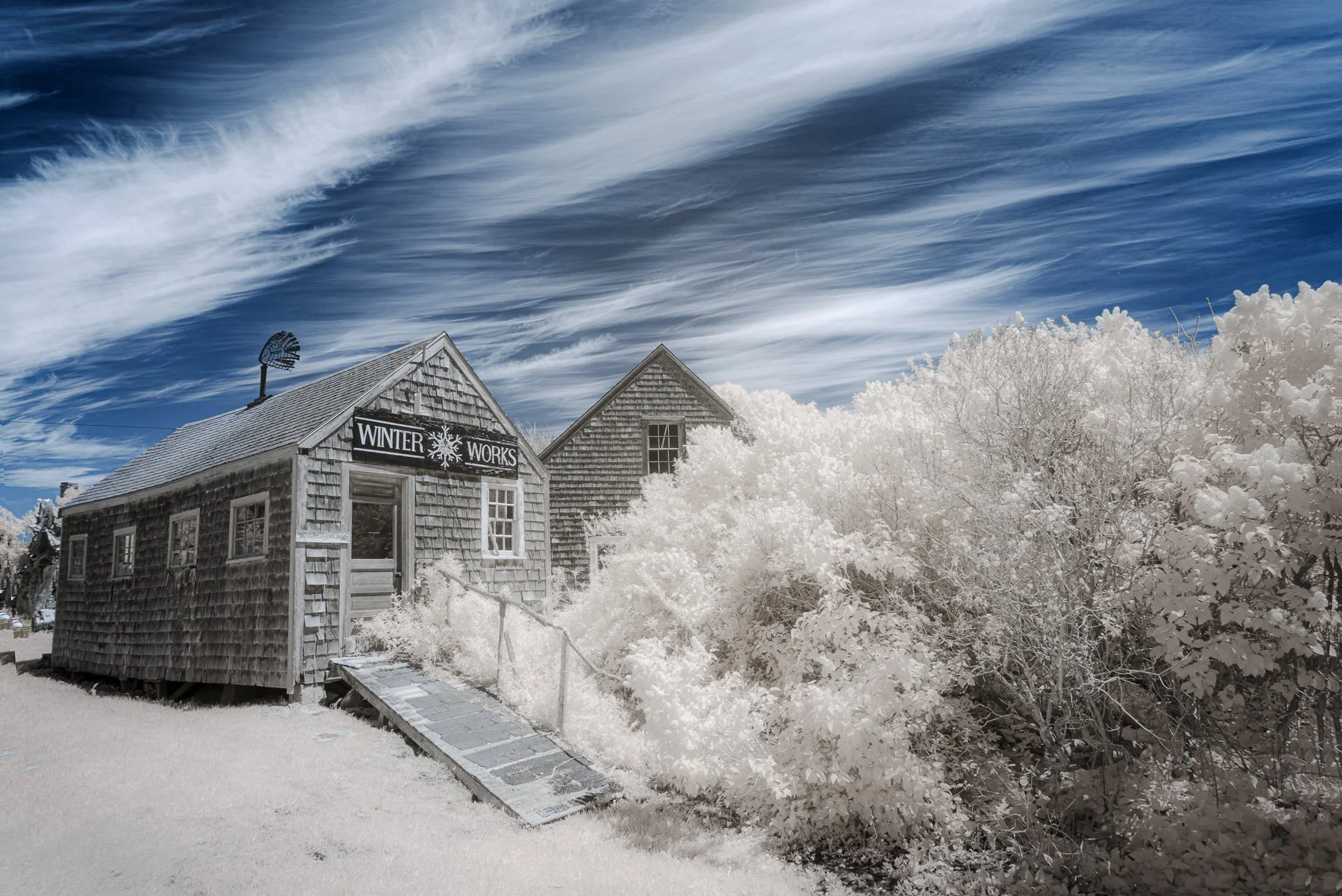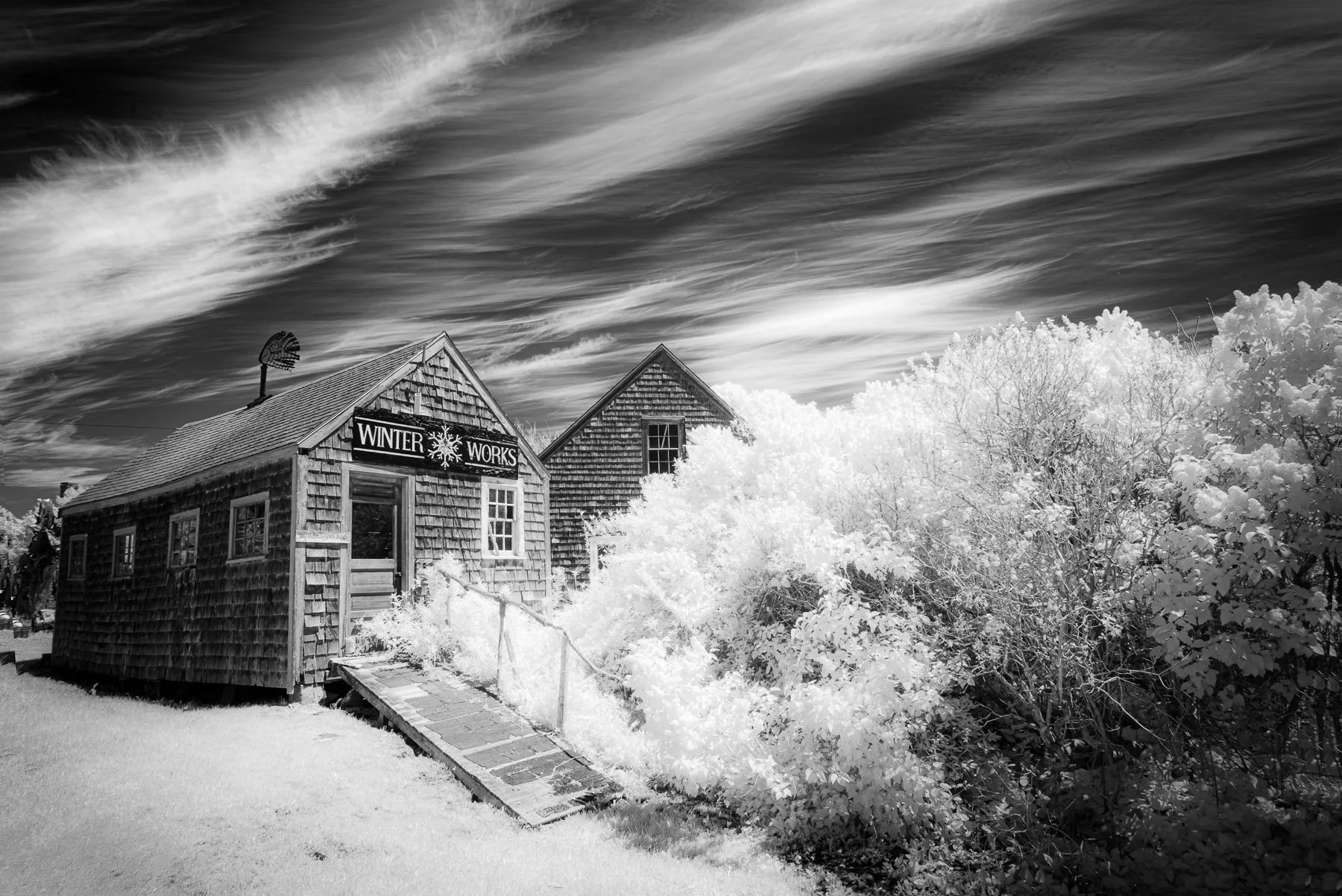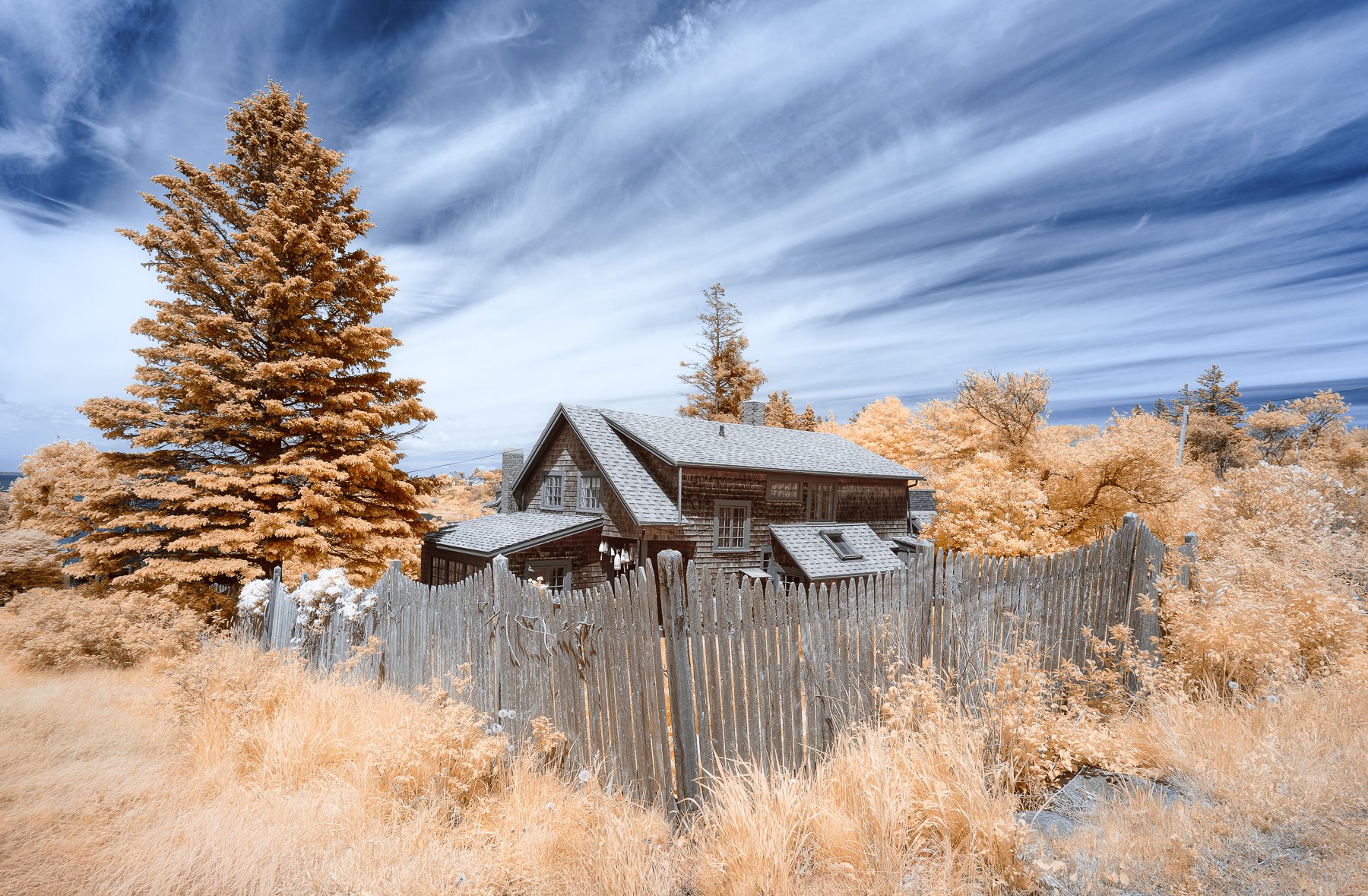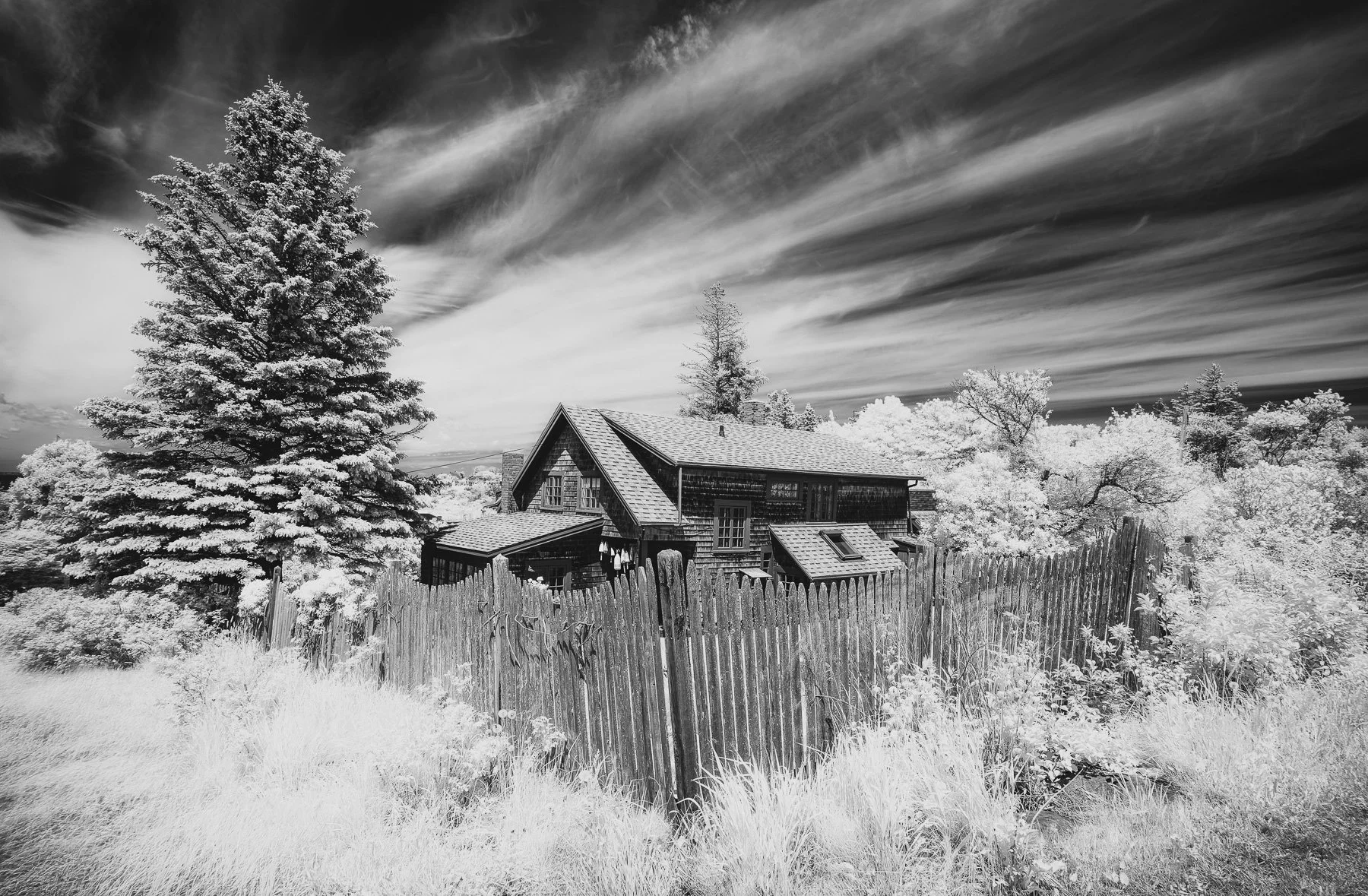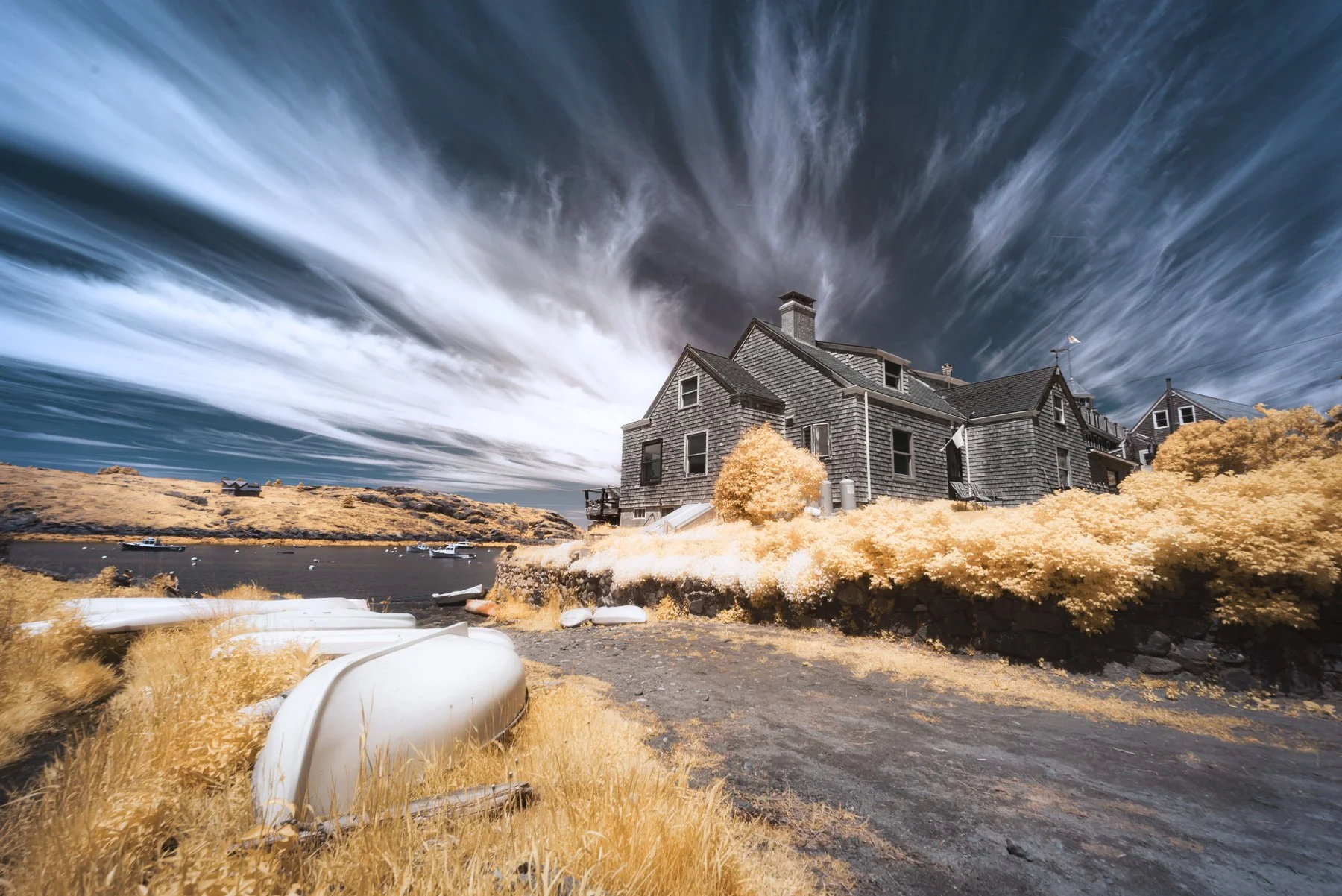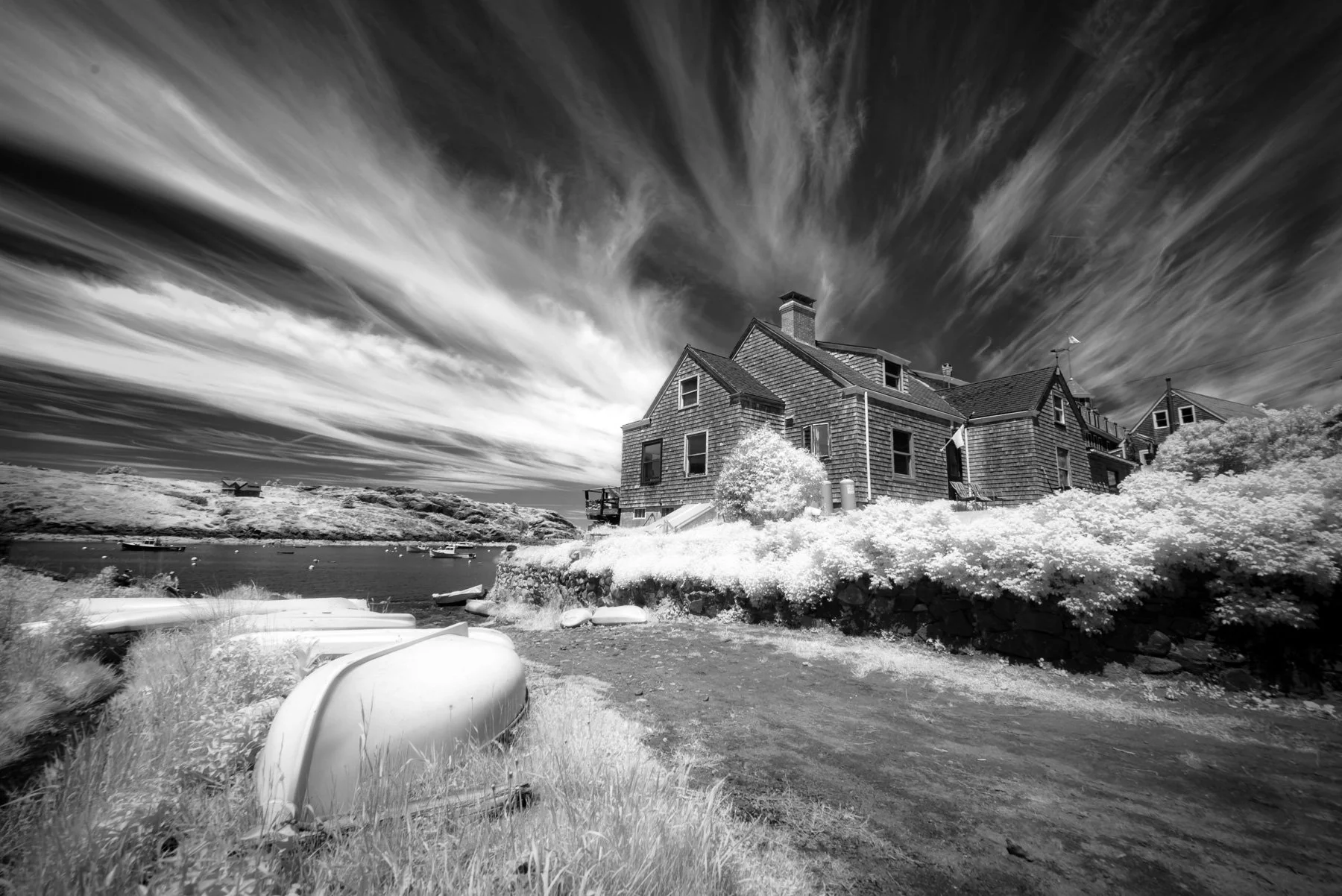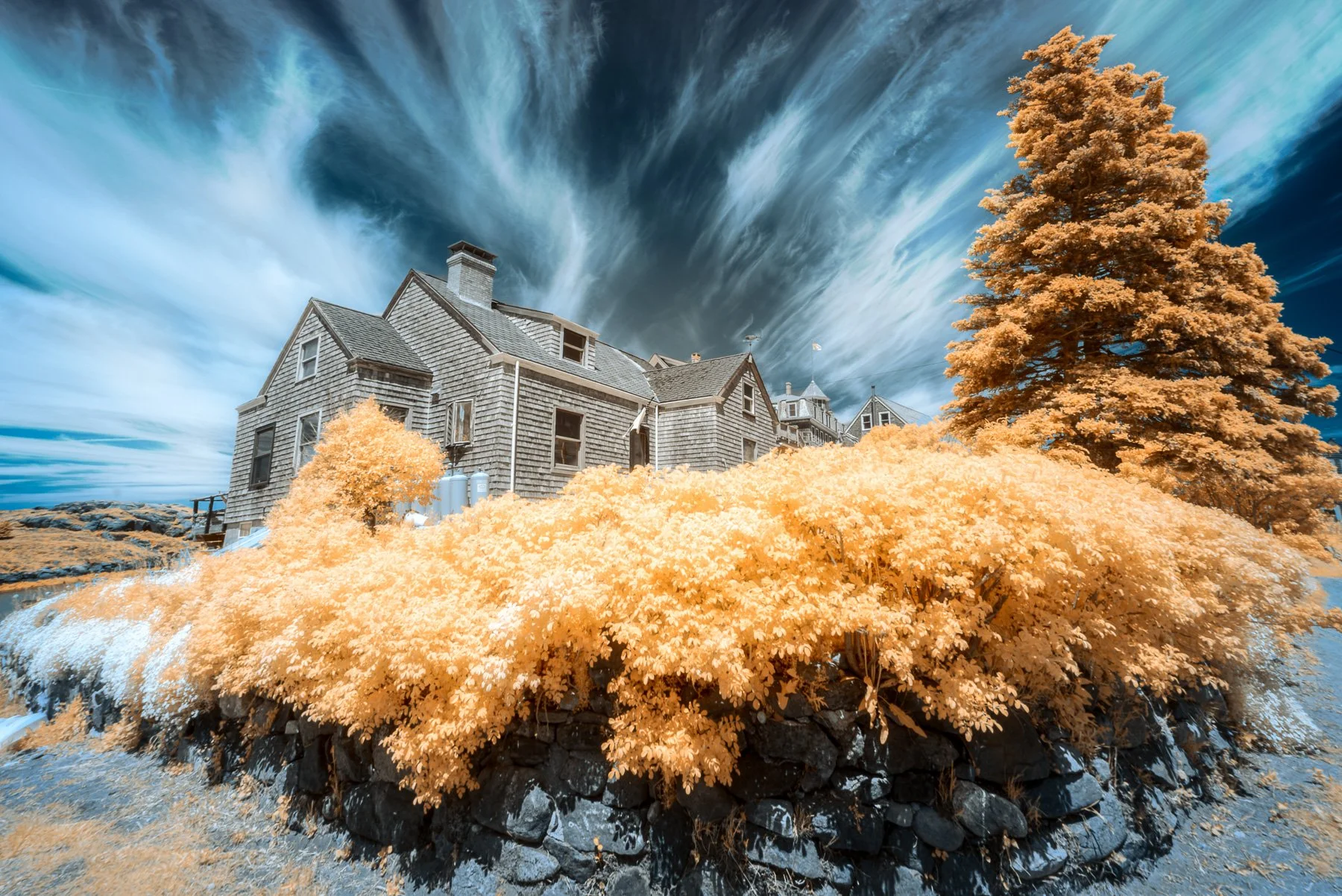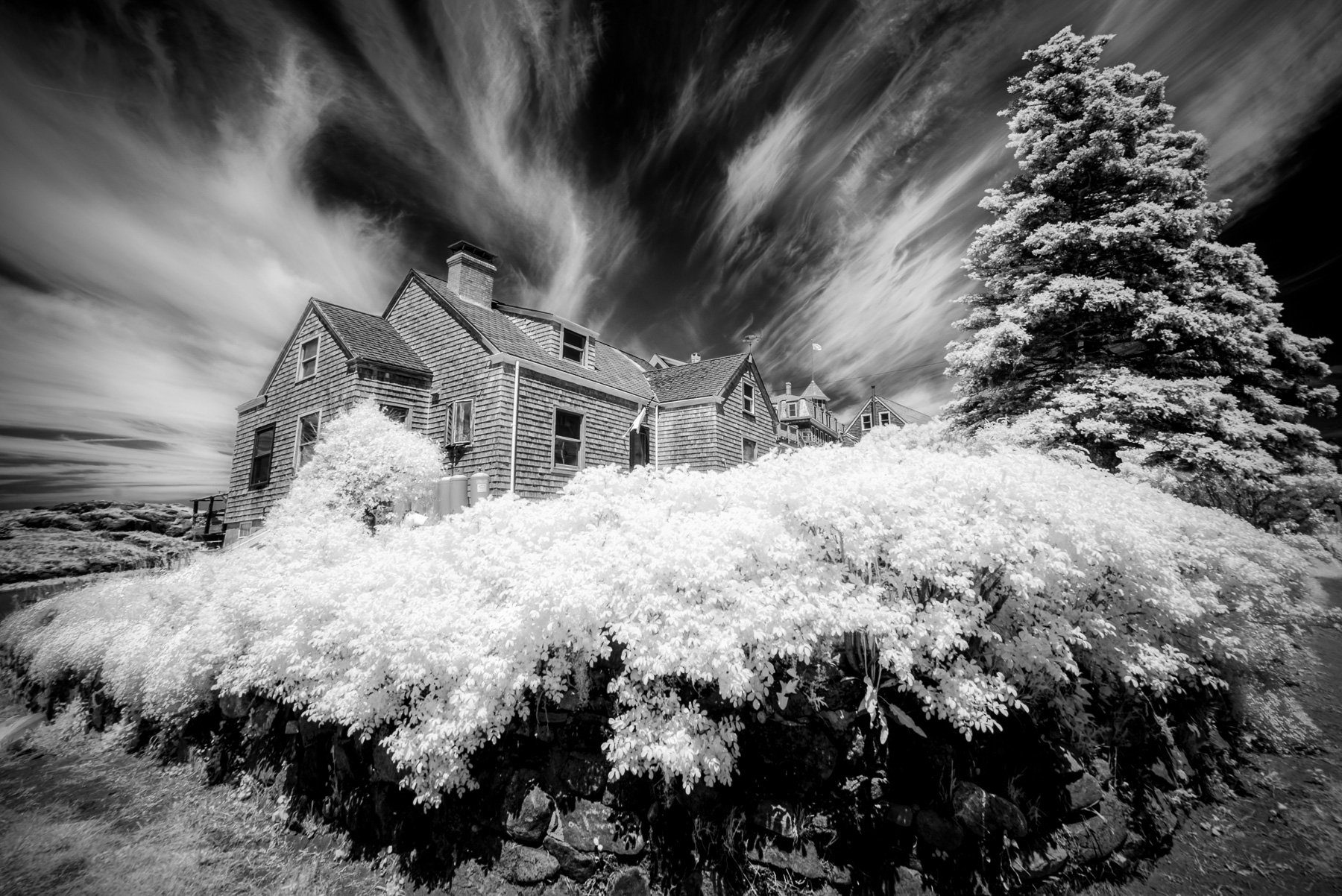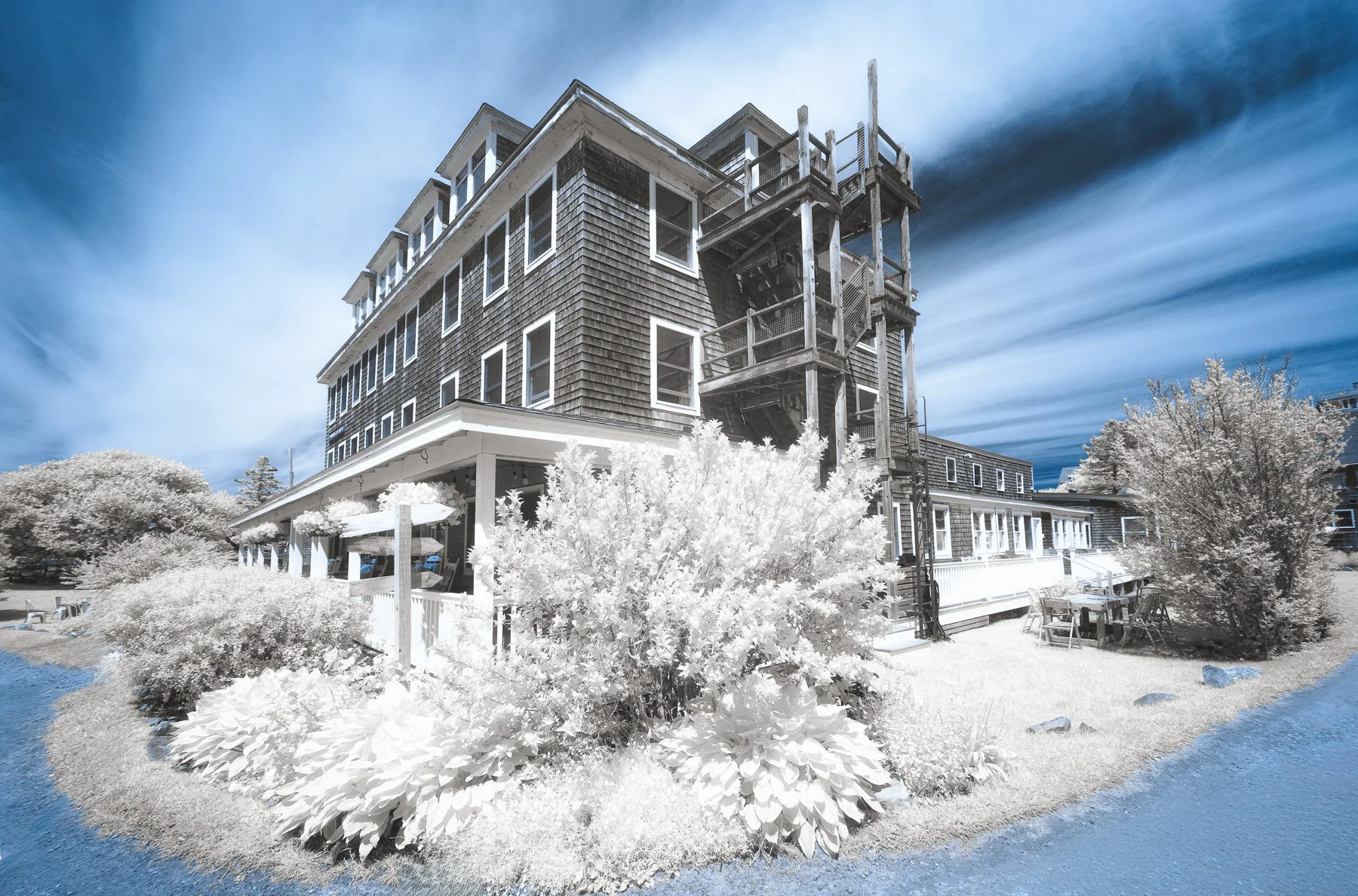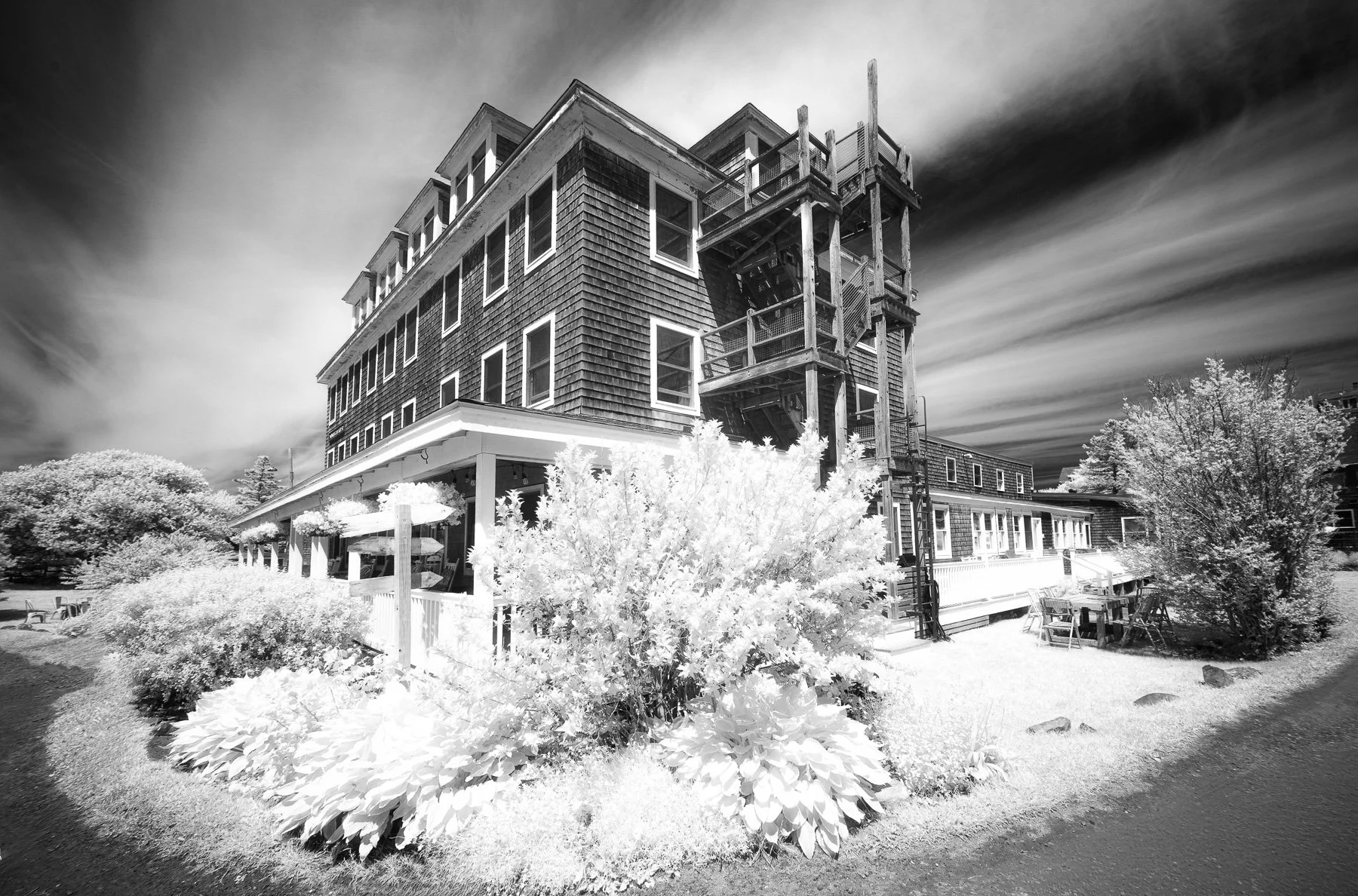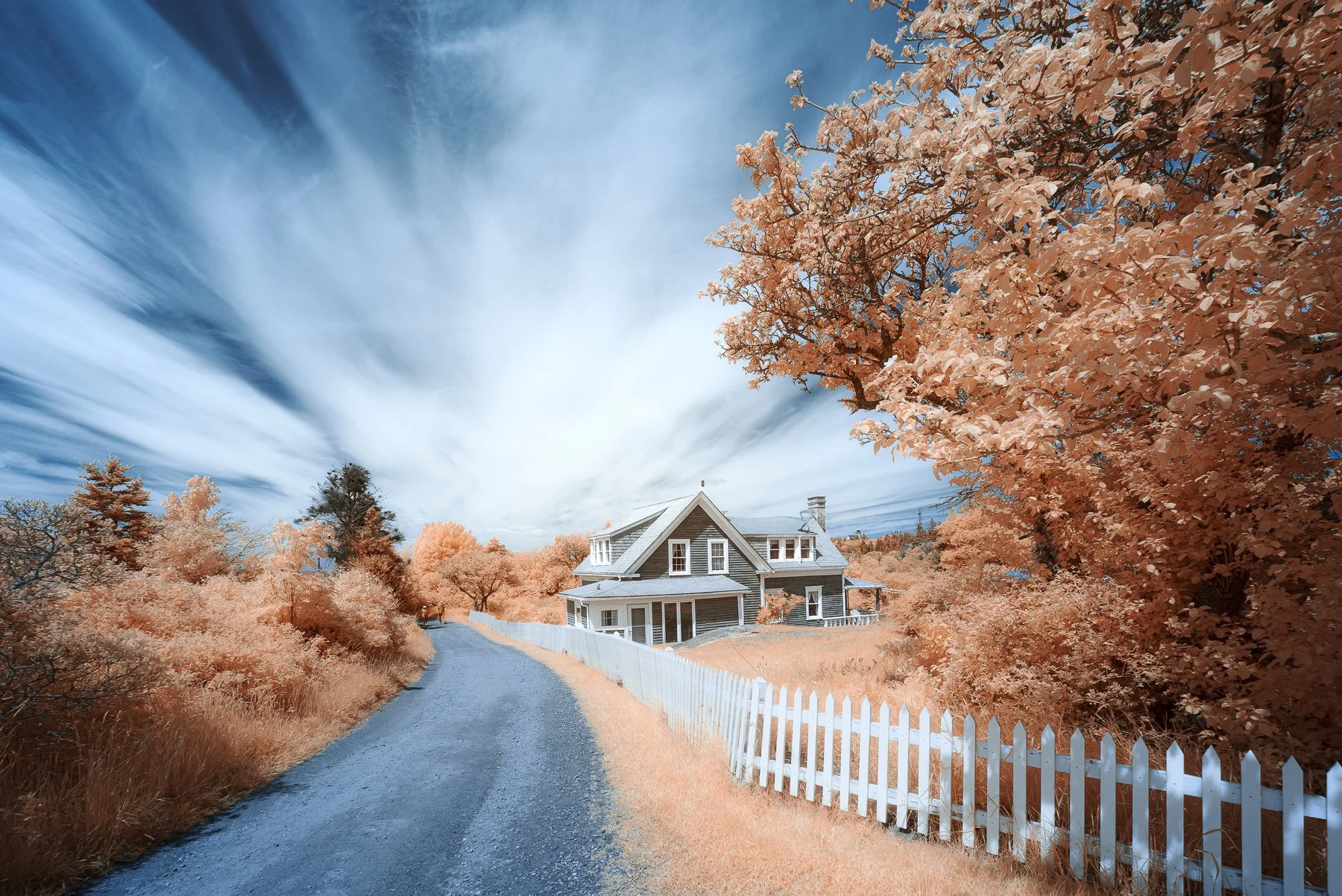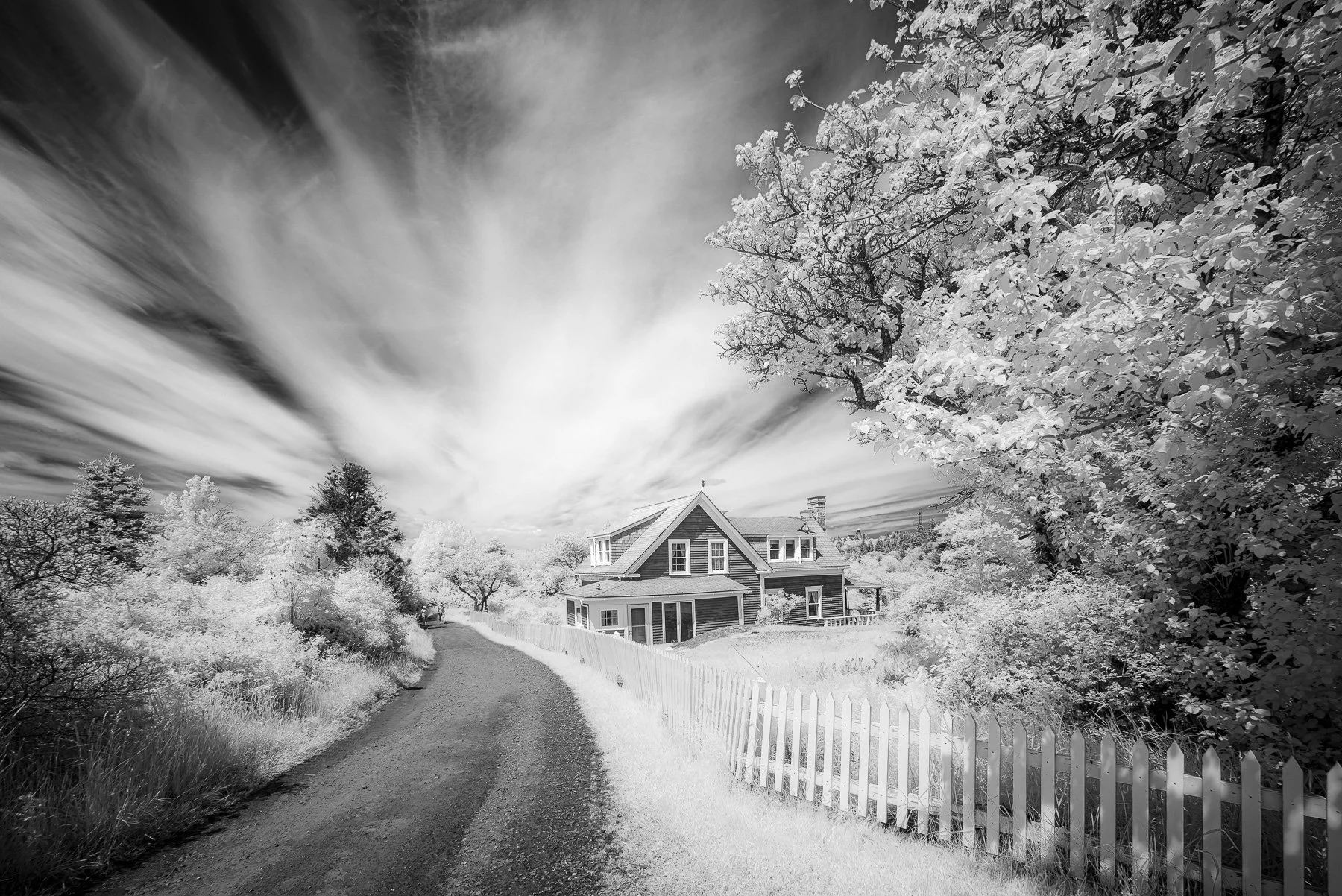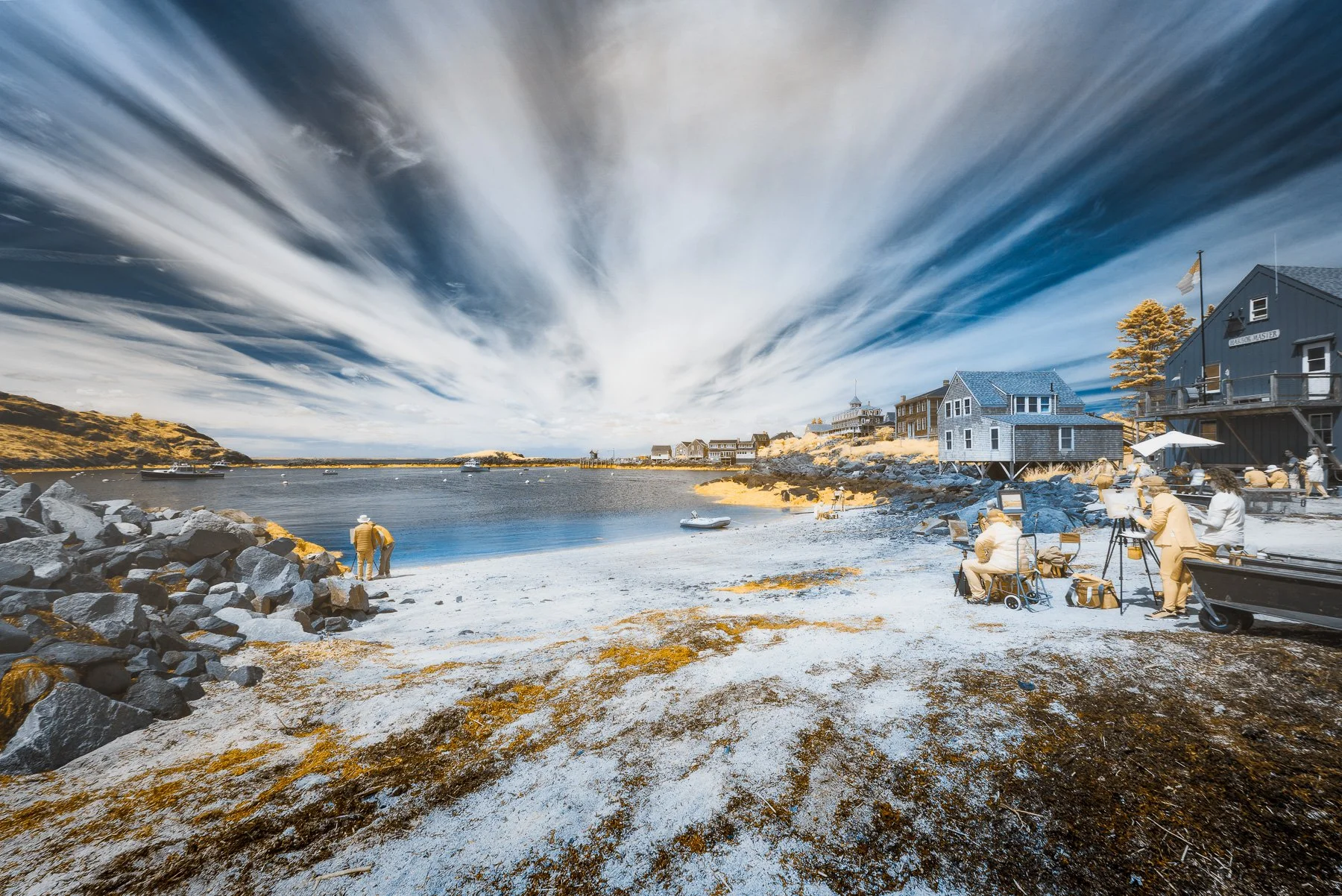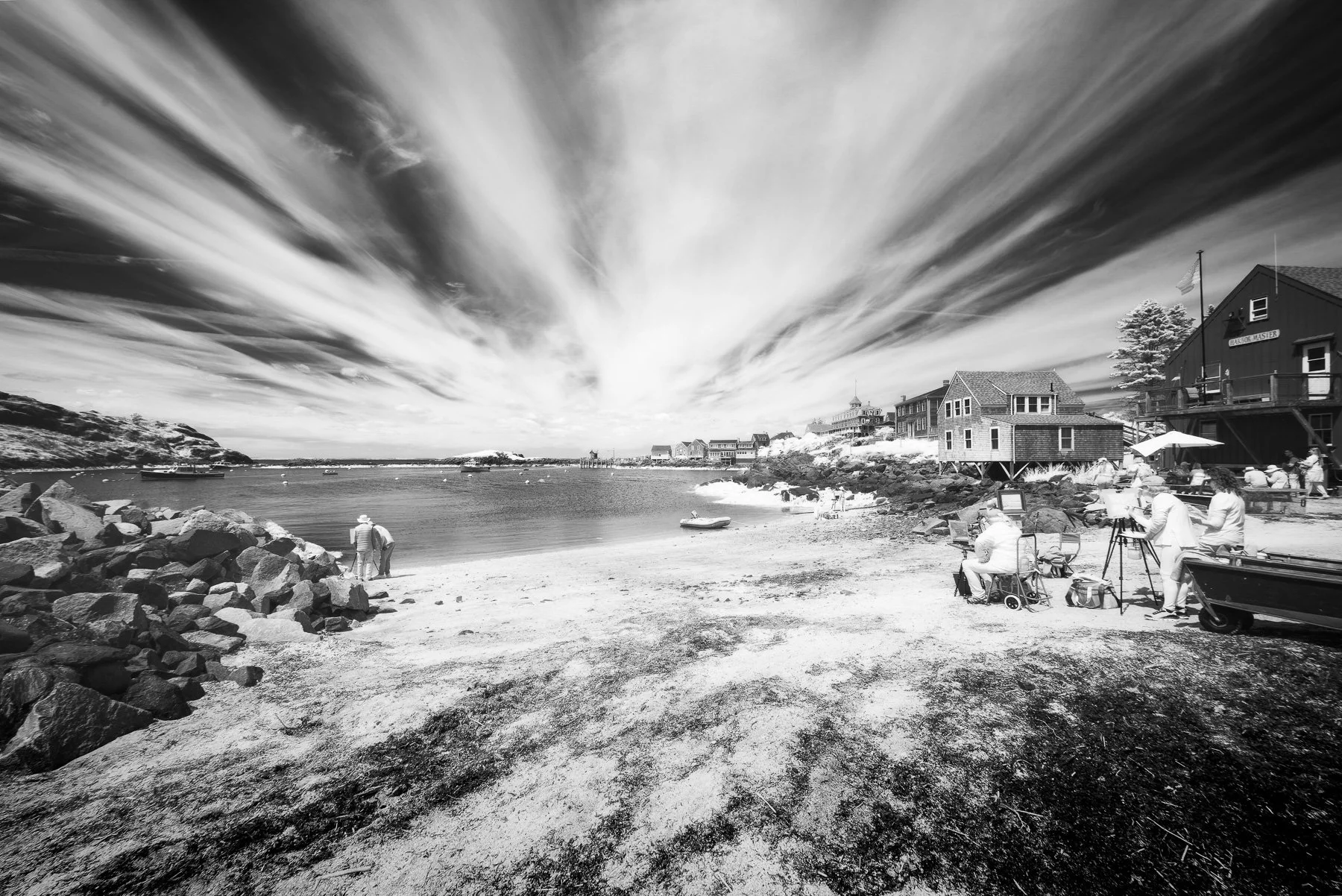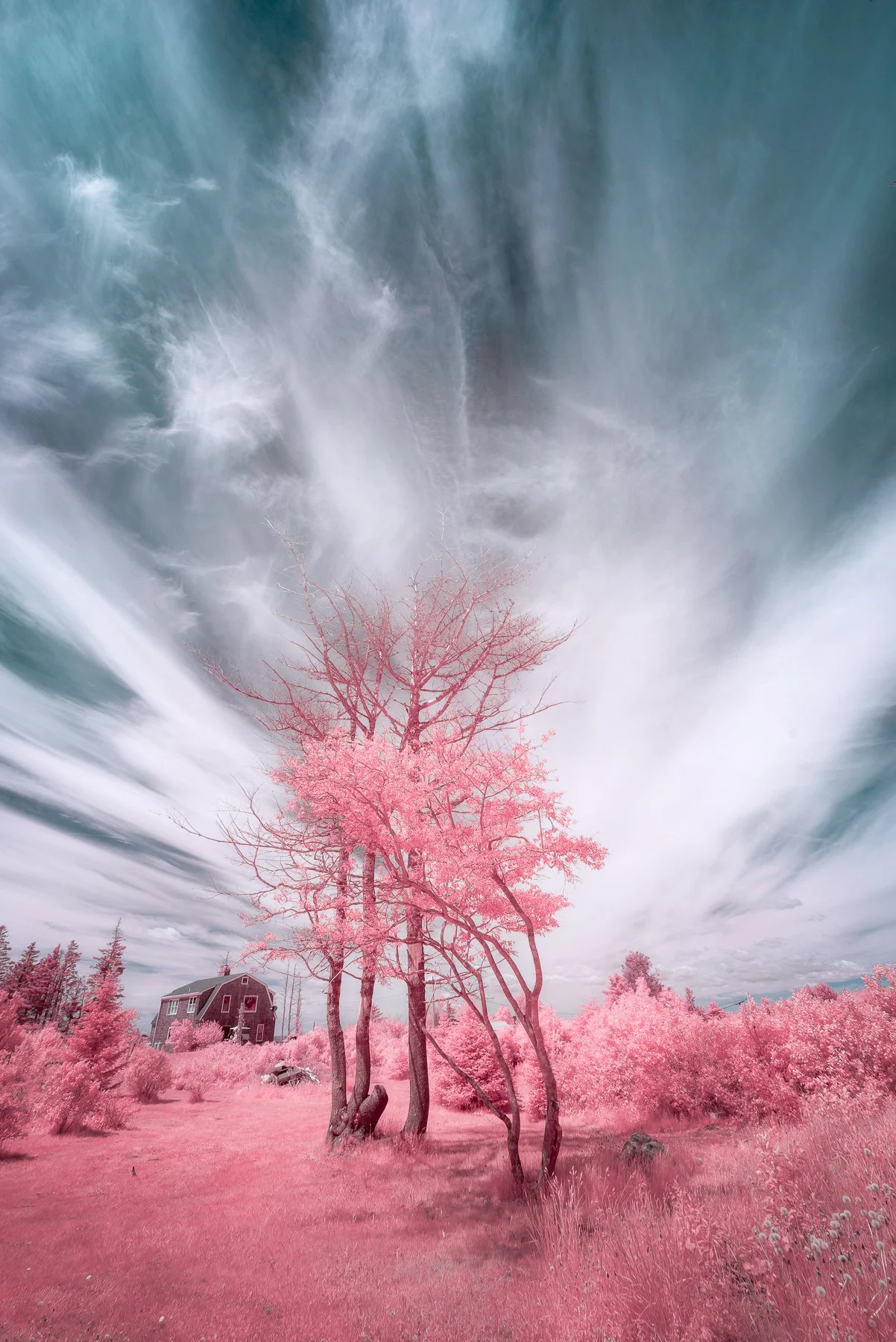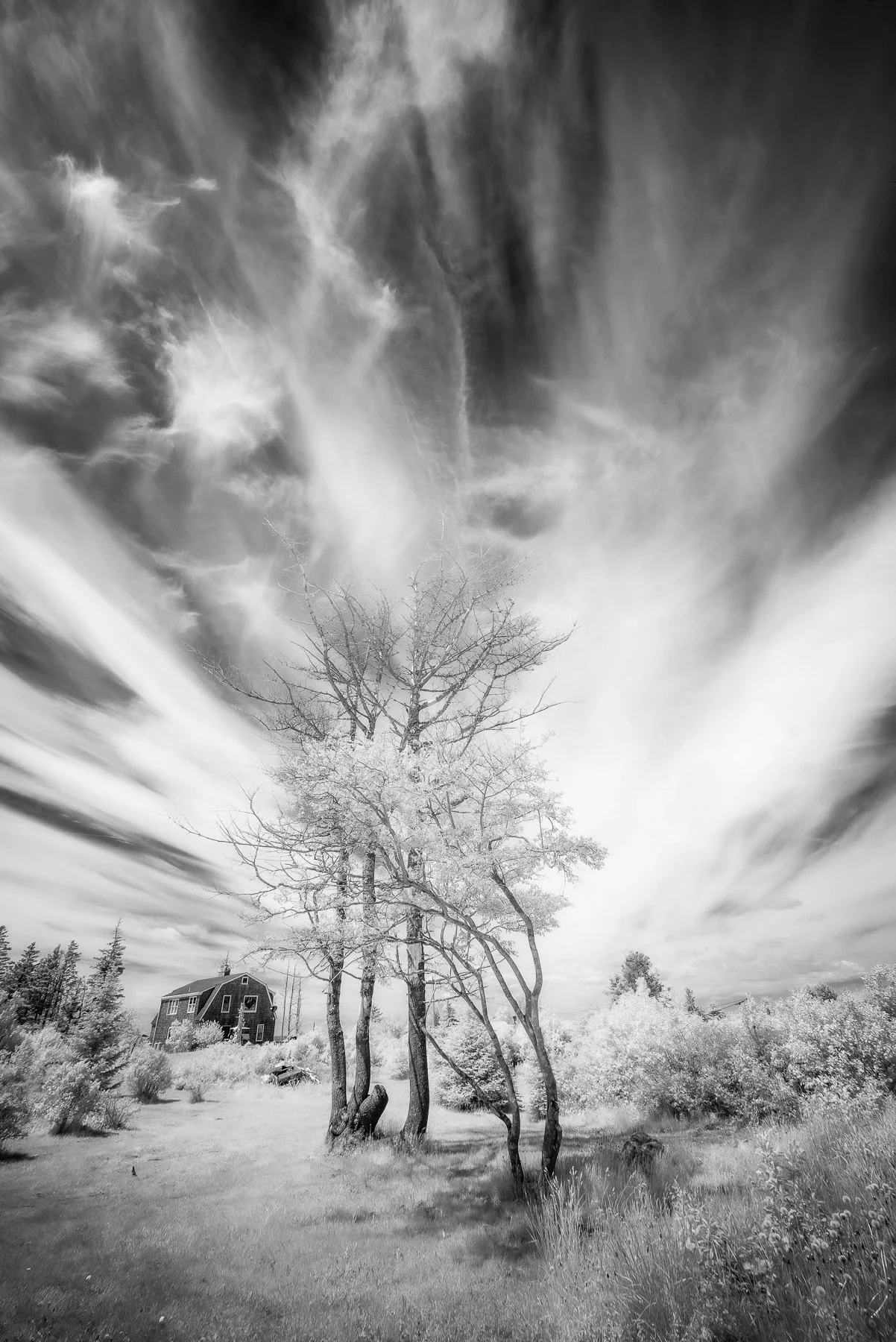

I have been shooting digital infrared photography since 2007, when I converted my first camera - a 2003 Nikon D100. While infrared photography has existed for decades in the film world, the process of loading, developing, and printing kept it a niche hobby. The process naturally found its way to the digital medium and became much more accessible to a wider group of enthusiasts. That’s when I became involved.
Infrared photography is highly condition-sensitive, relying heavily on elements such as wispy clouds and fog to create dramatic images. While the same elements that make visible-light photography dynamic also apply to infrared, wispy clouds and fog work especially well. There is no better place to find these conditions (in Summer) than Monhegan Island. This tiny, rugged island is located eight miles off the mid-coast of Maine.
Monhegan Island has long been very popular with Artists and, to some extent, photographers. The island offers no services, including no roads or automobiles, and only a few places to eat and stay. What it does have is lots of coastal charm and history. My latest four-day excursion started with the usual one-hour ferry ride. As I watched harbor seals sunning themselves on the rocks and countless species of shorebirds darting across the water, I started to notice unique cloud formations in all directions. The kind of wispy cloud formations perfect for infrared images. My infrared camera is an essential item in my camera bag on Monhegan trips. I immediately grabbed my infrared camera and my favorite 24-70 mm lens, and stepped off the Boat to begin shooting.
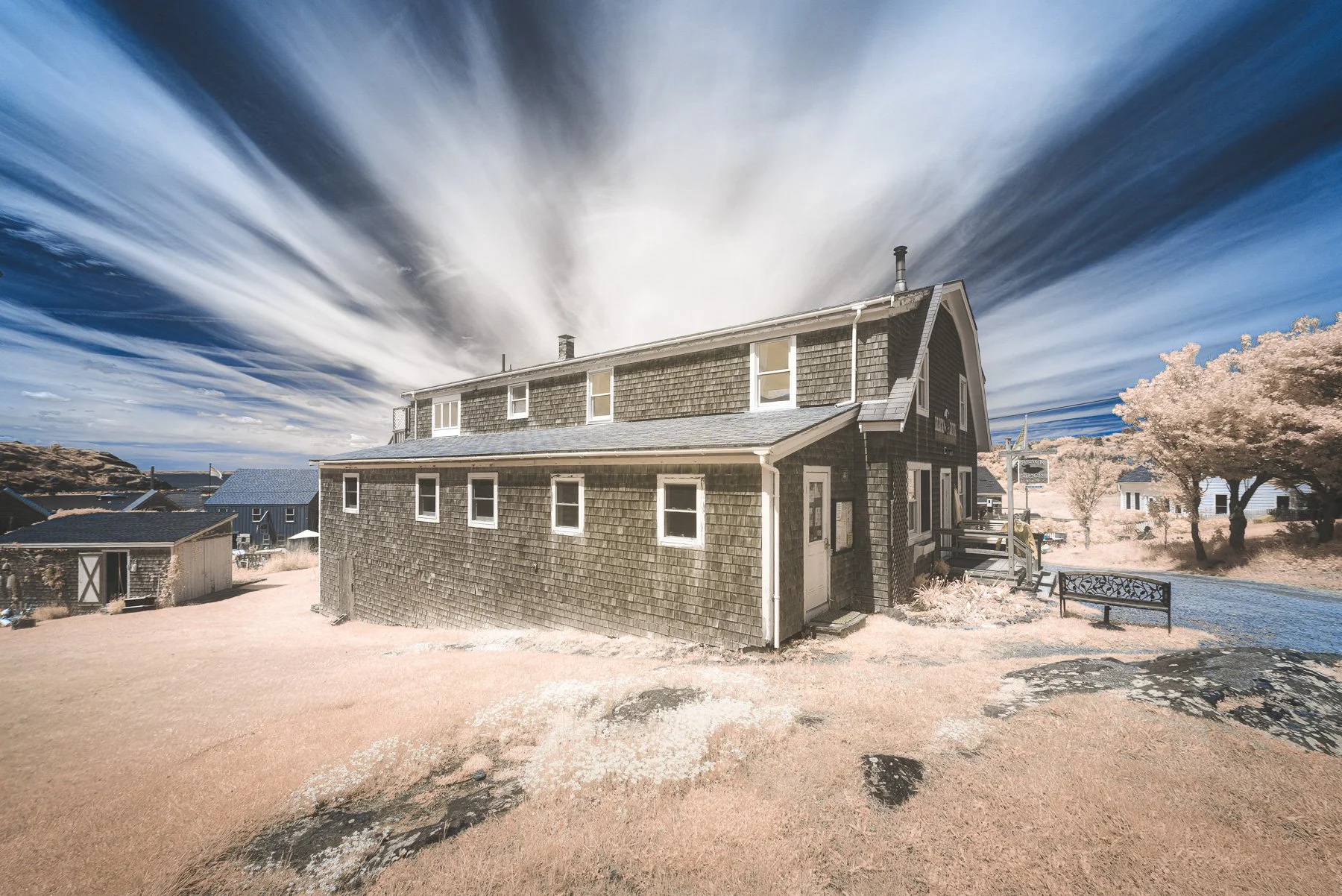
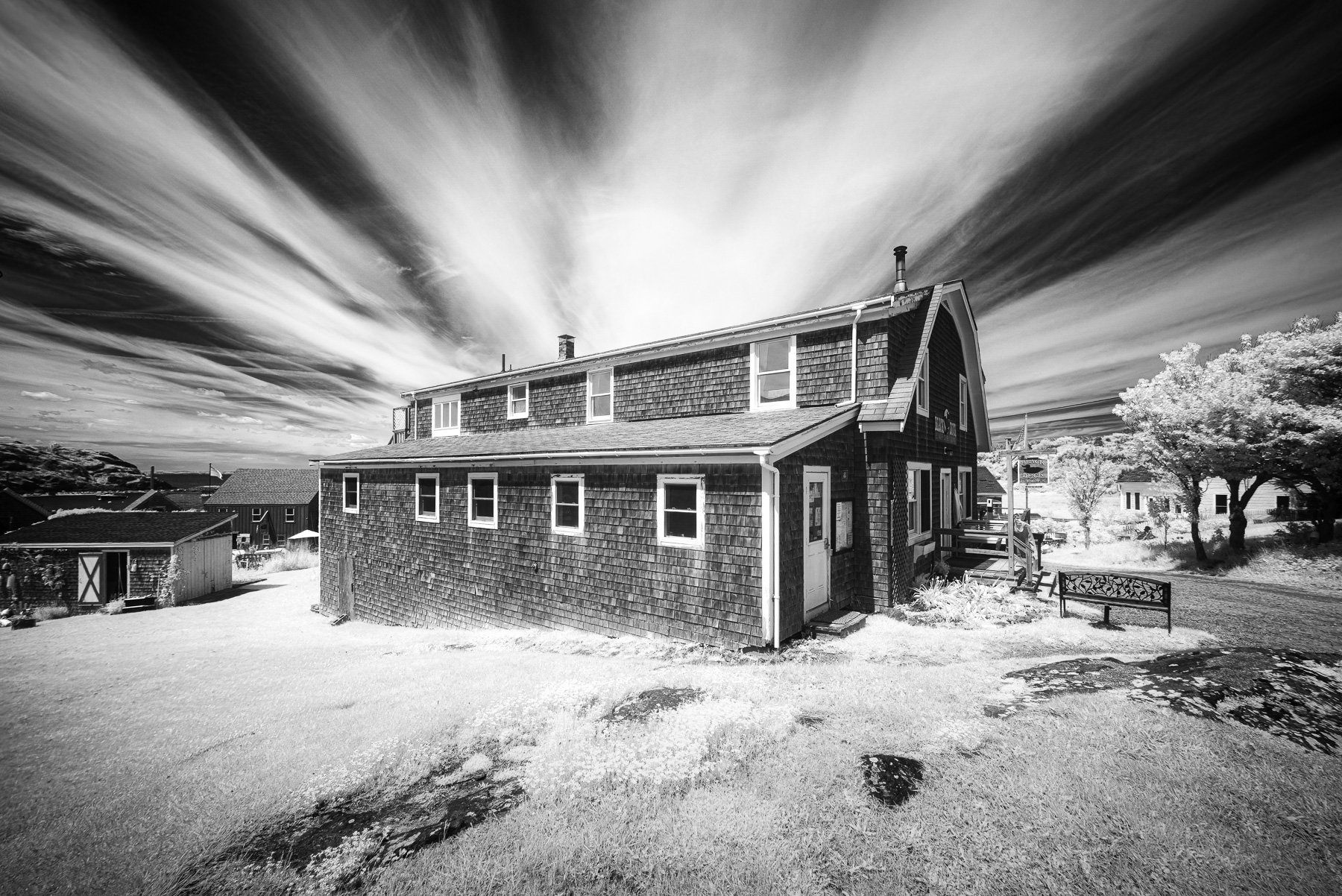
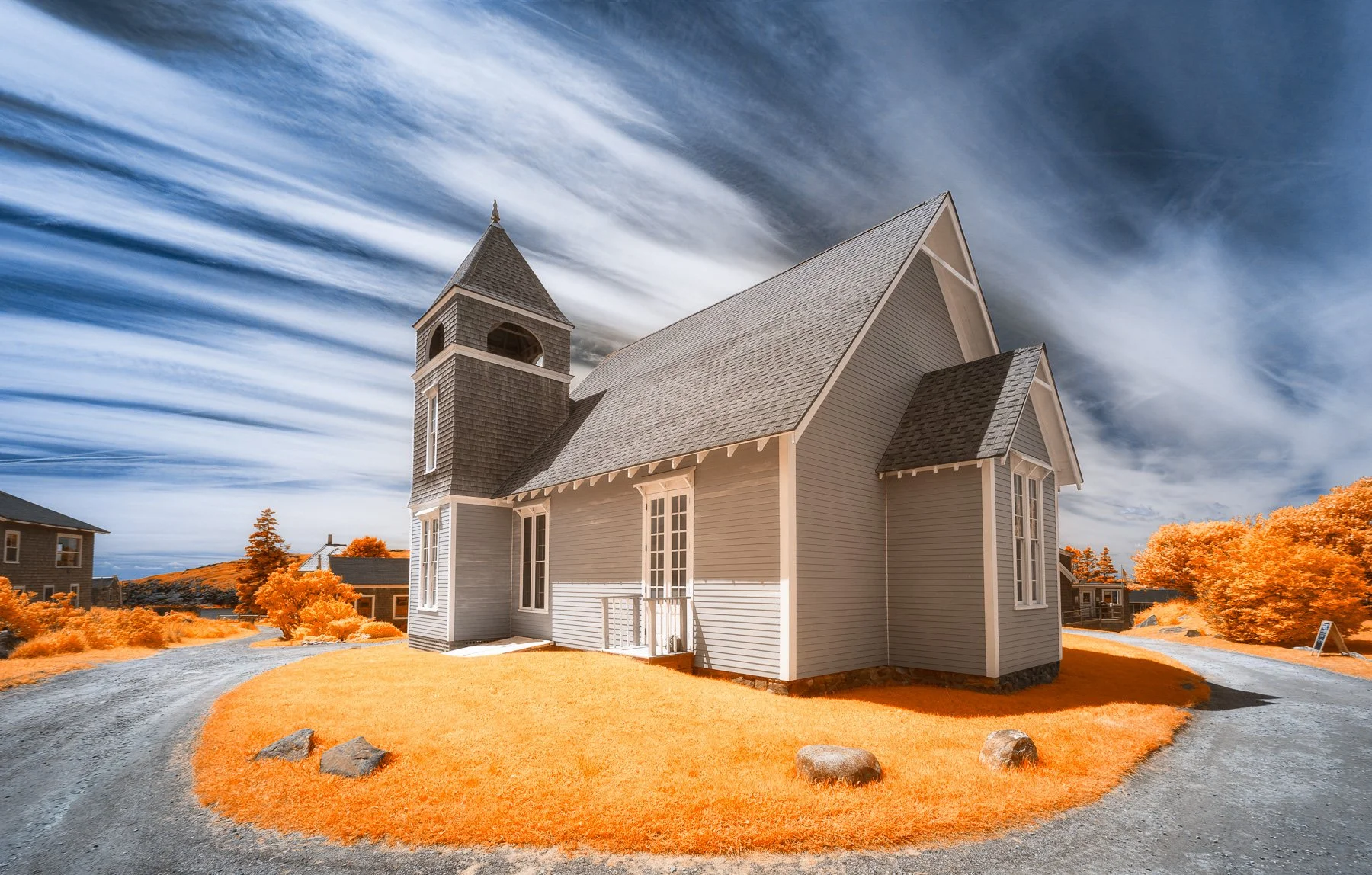
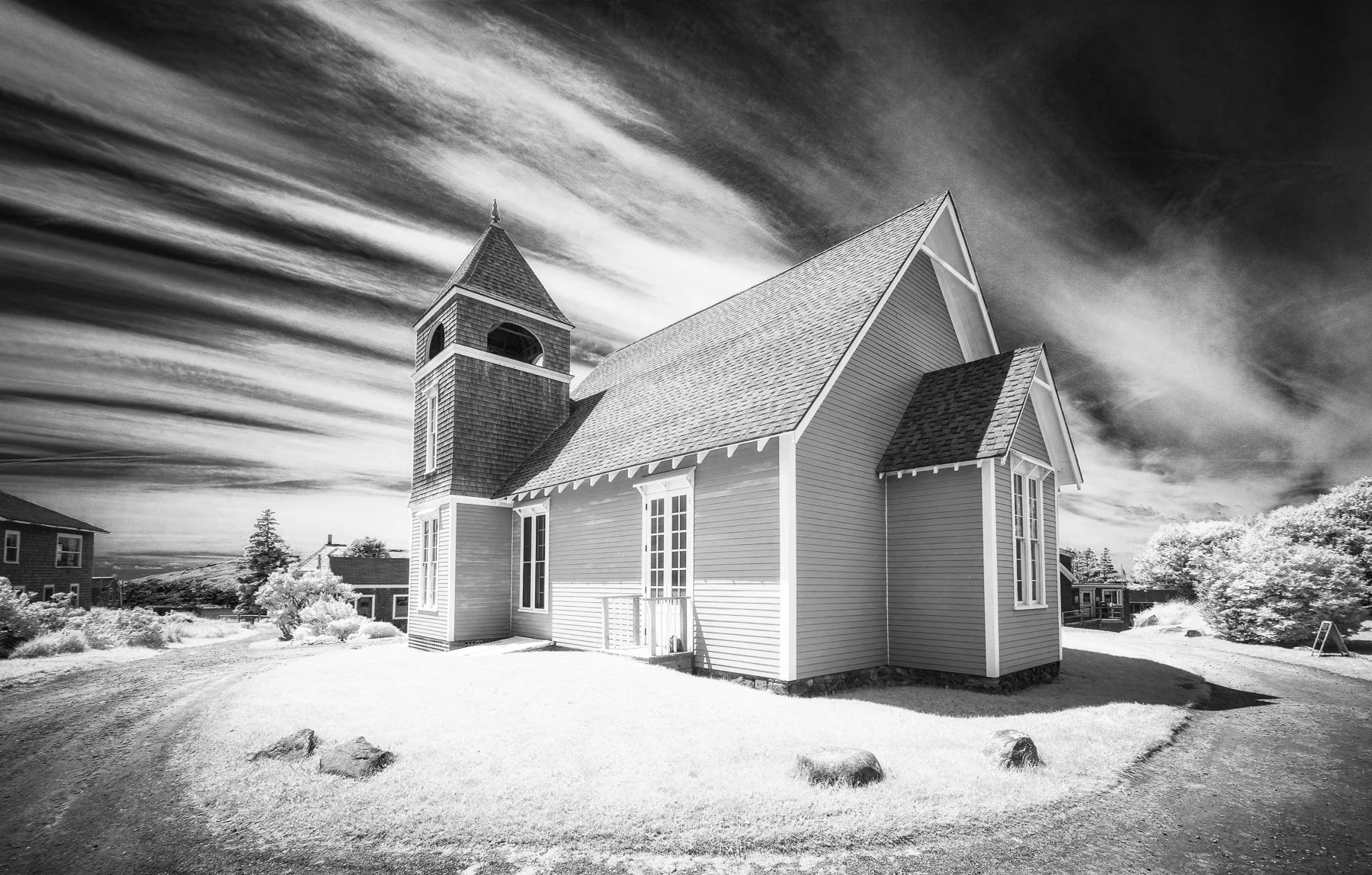
Along with wispy clouds, Monhegan’s weathered wooden dwellings pair beautifully with the dramatic sky. I was not off the Boat for more than a minute and began getting lots of photos. The cloud patterns are beautiful, but fleeting, so I had to get some images before the winds of the upper atmosphere dissipate them forever. I started shooting immediately, and it was a beautiful, successful start to my trip.