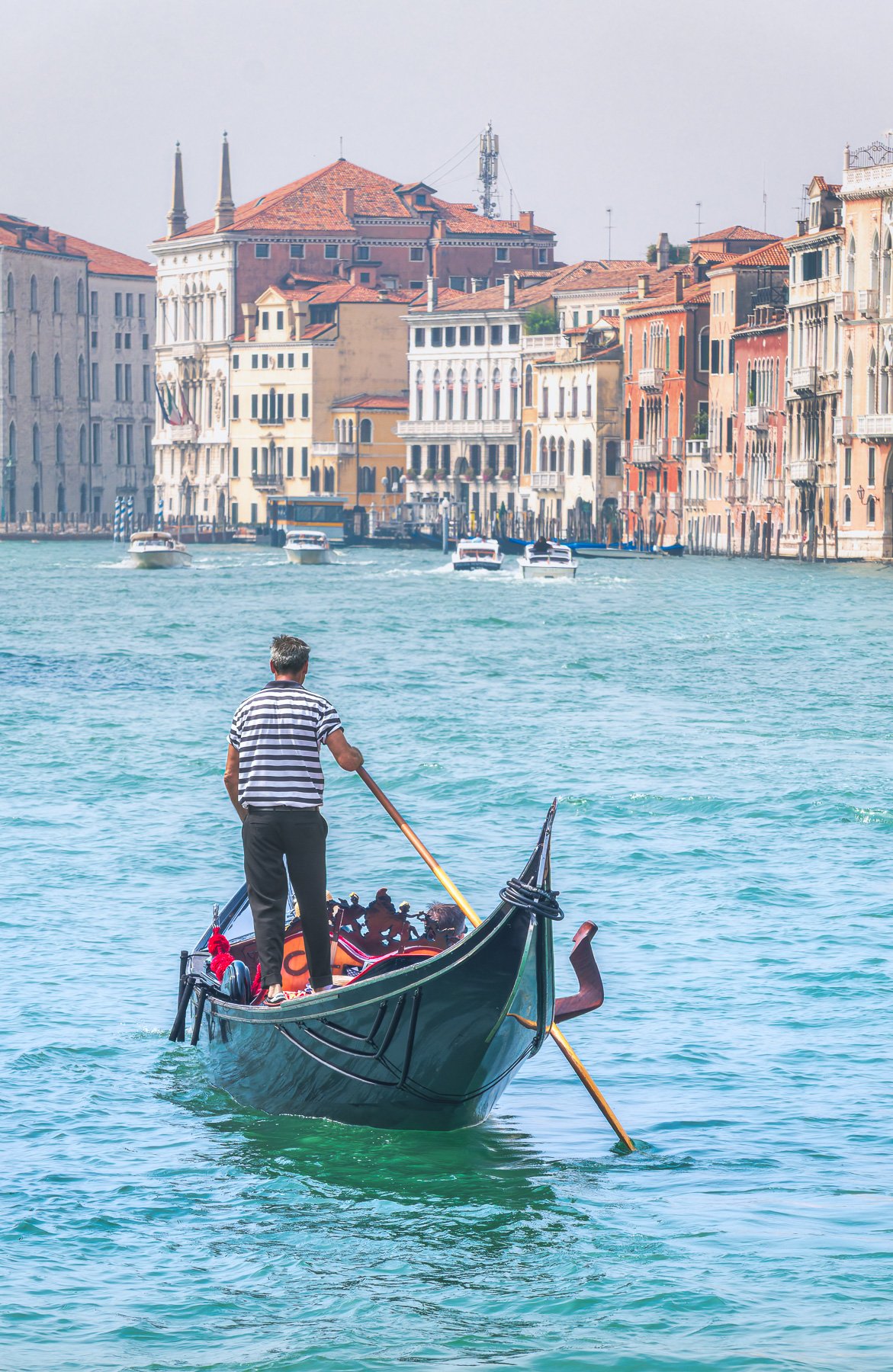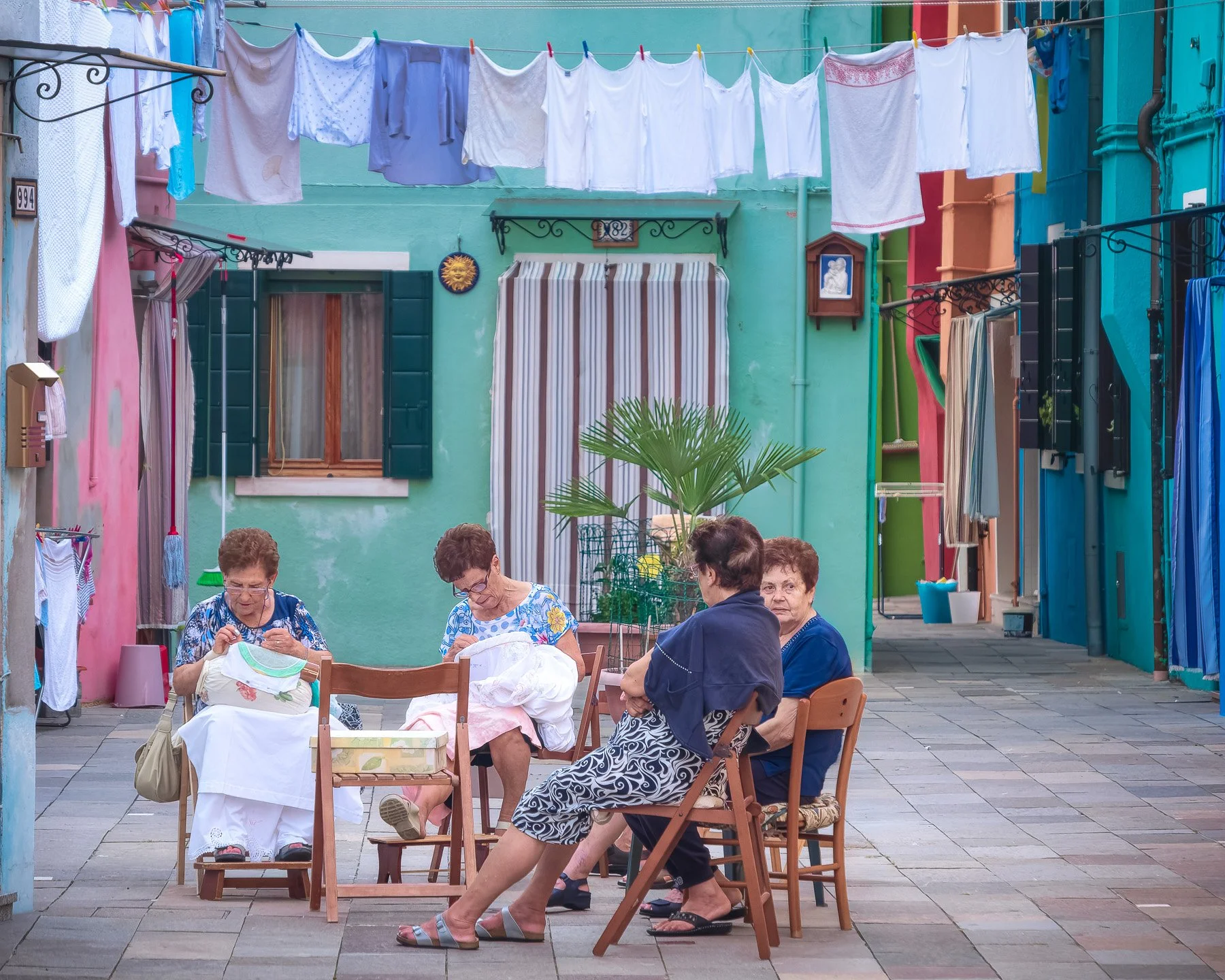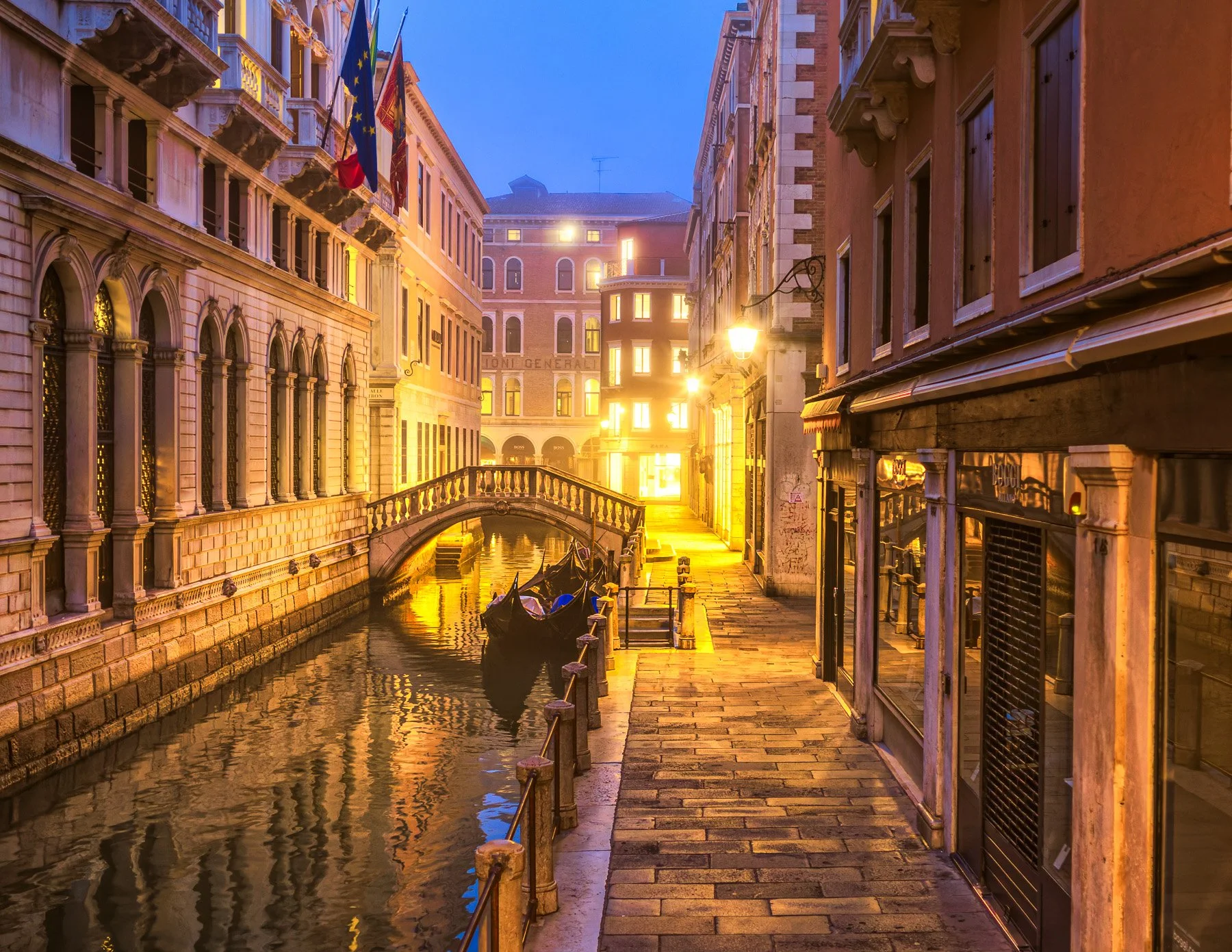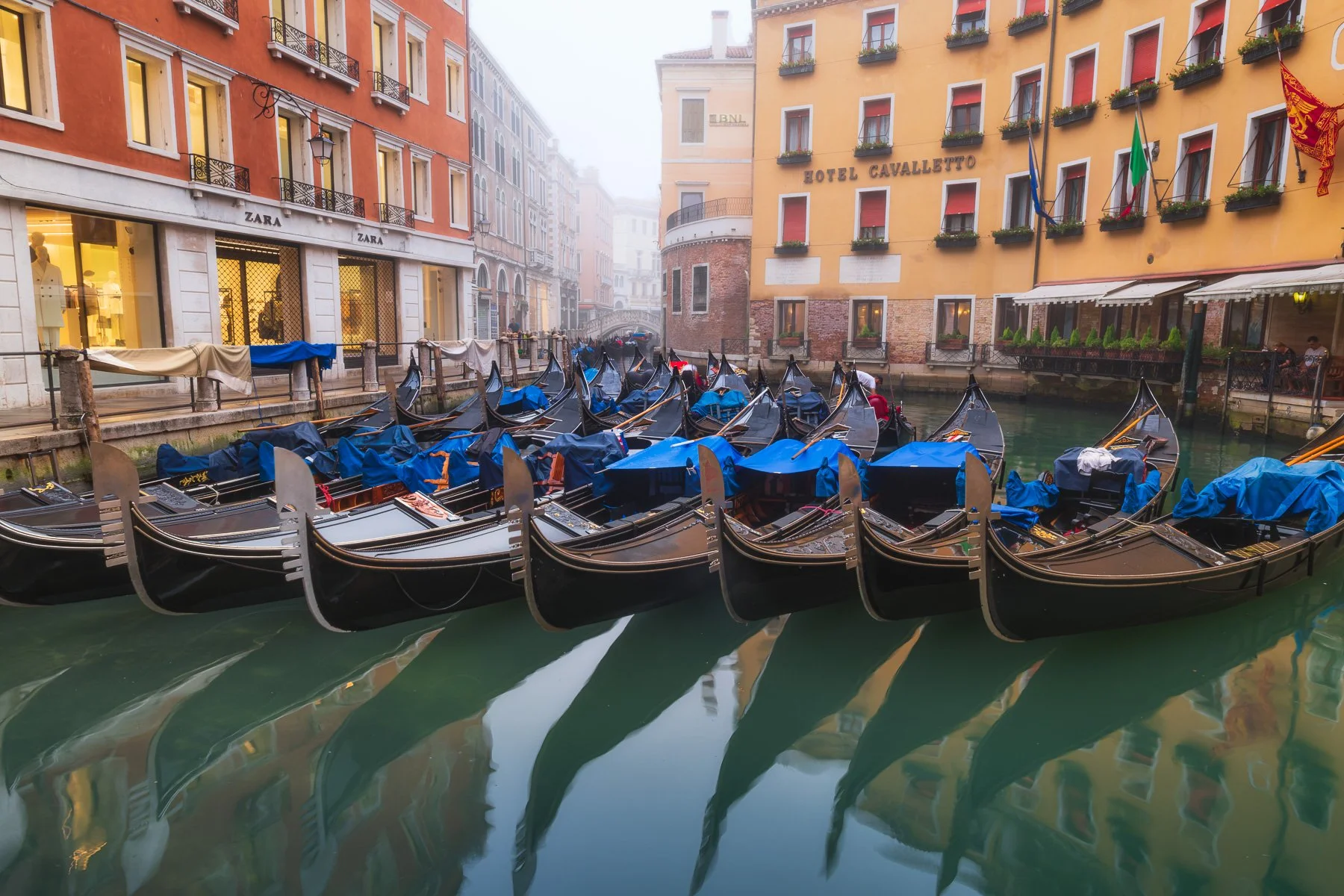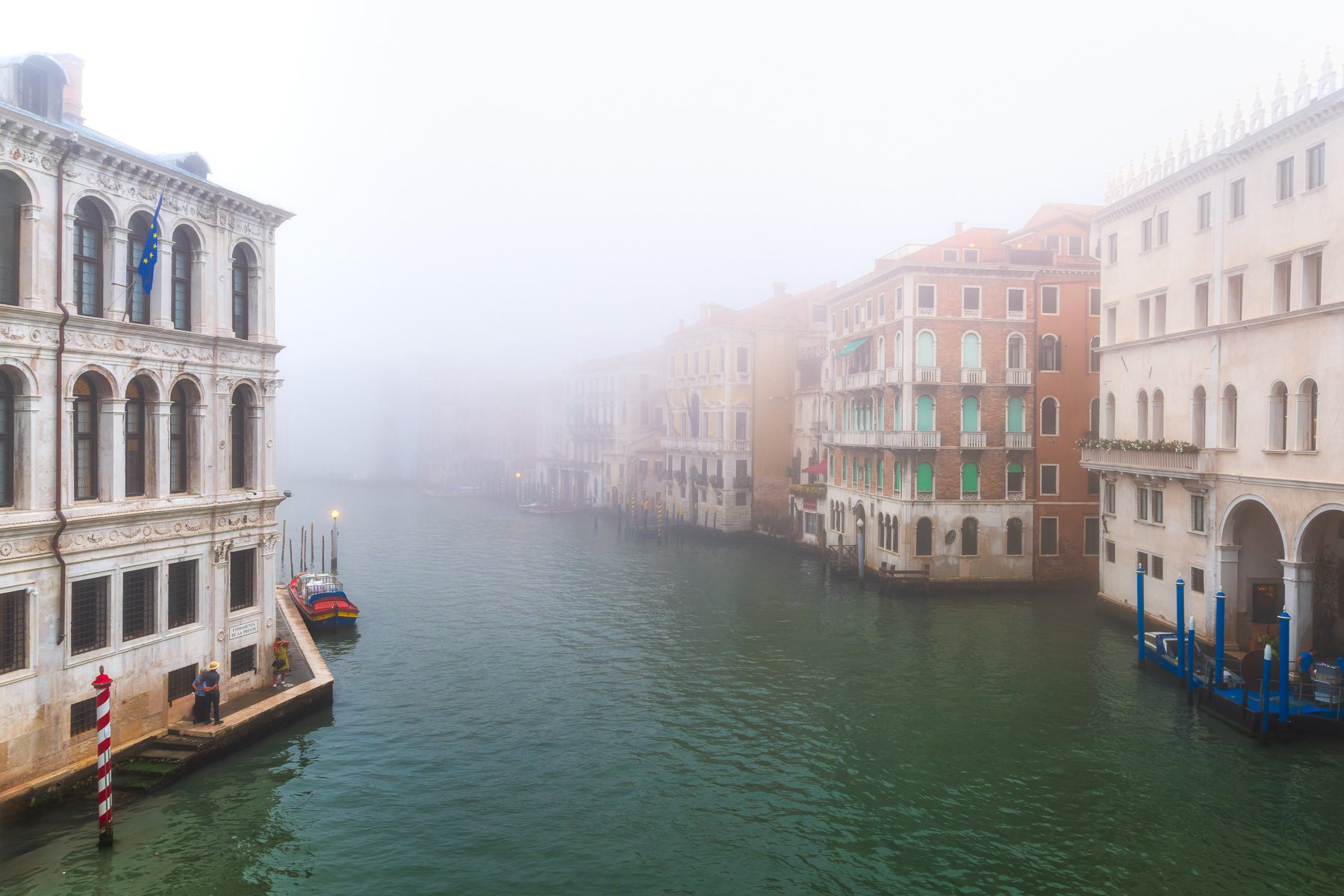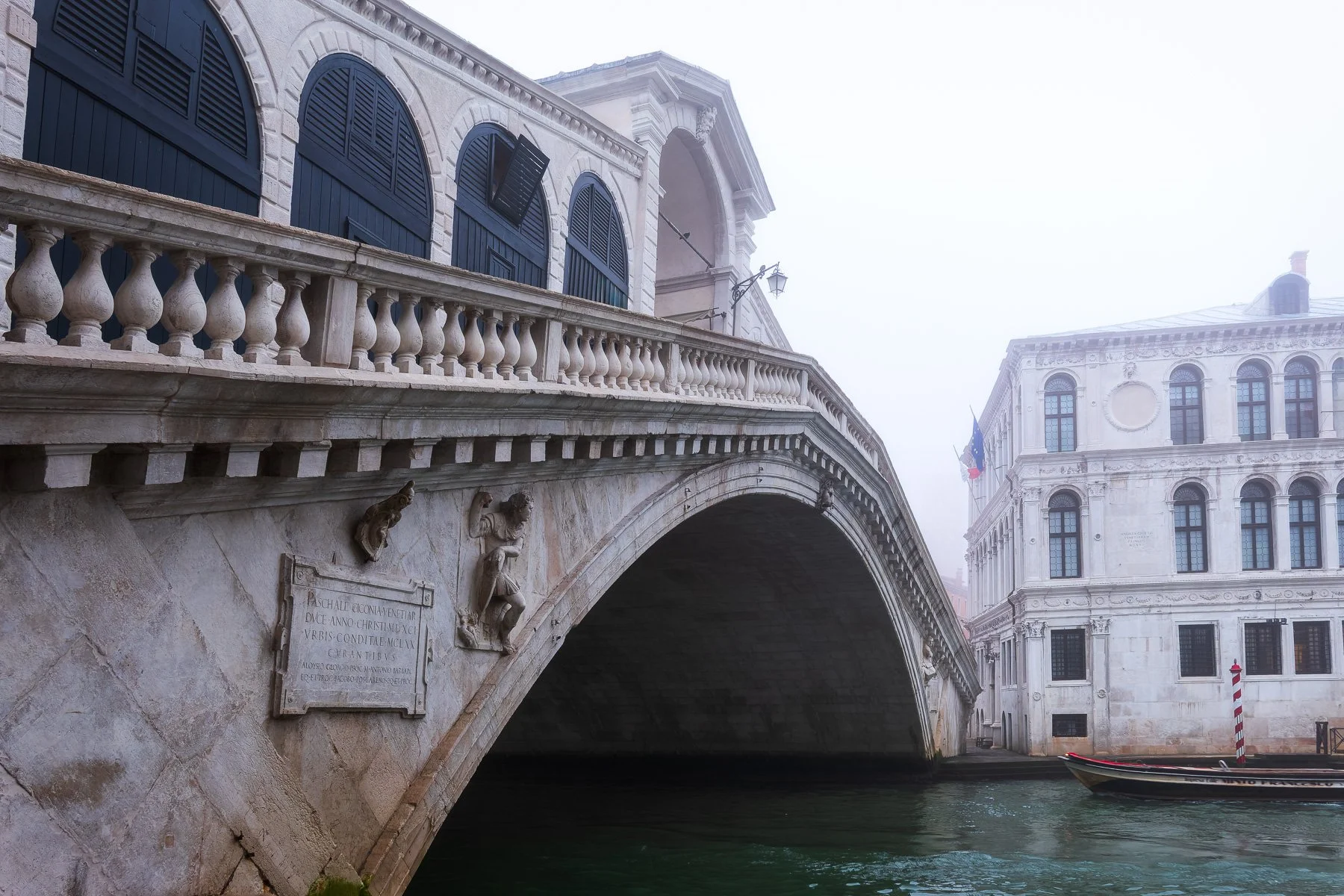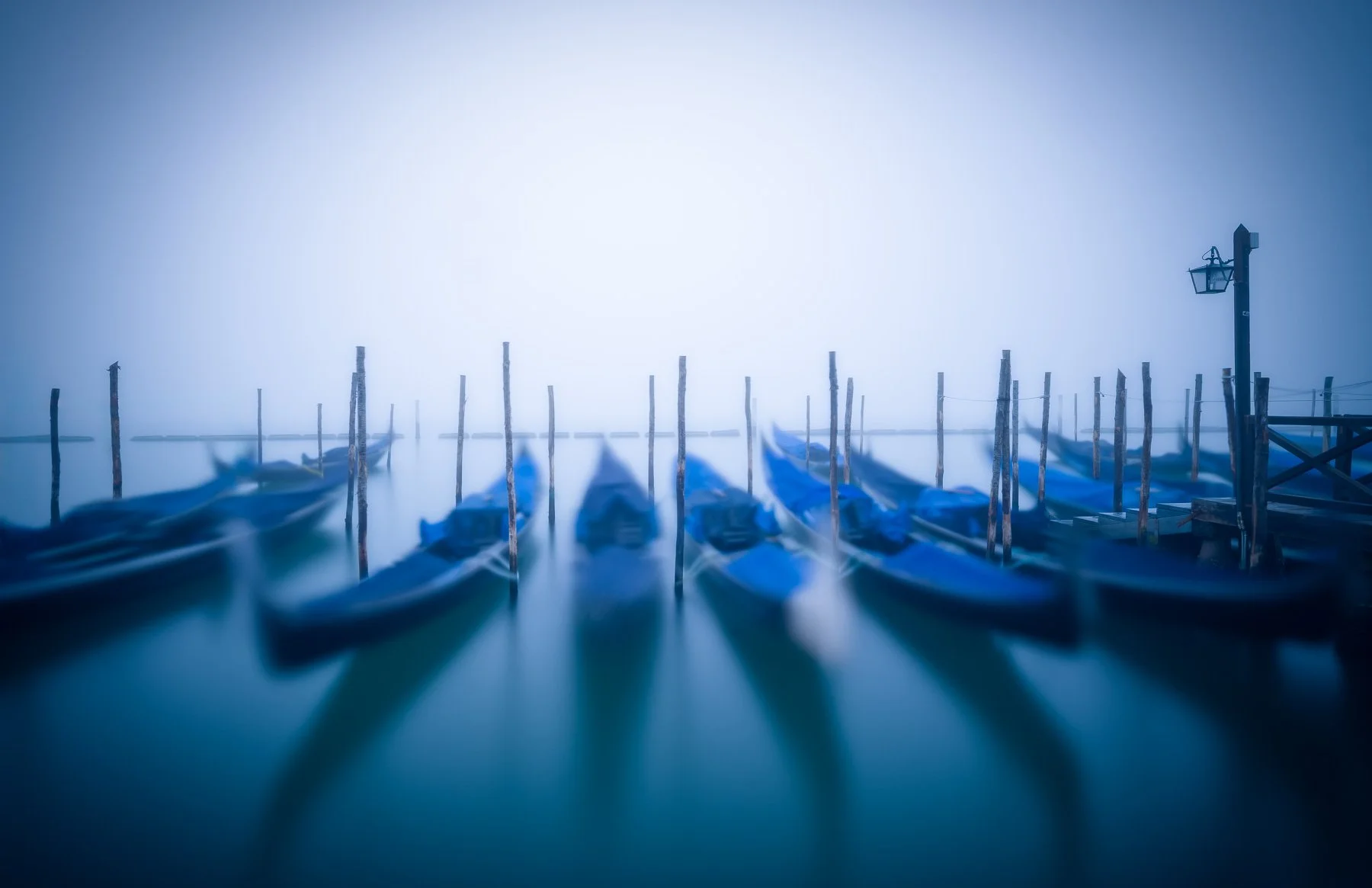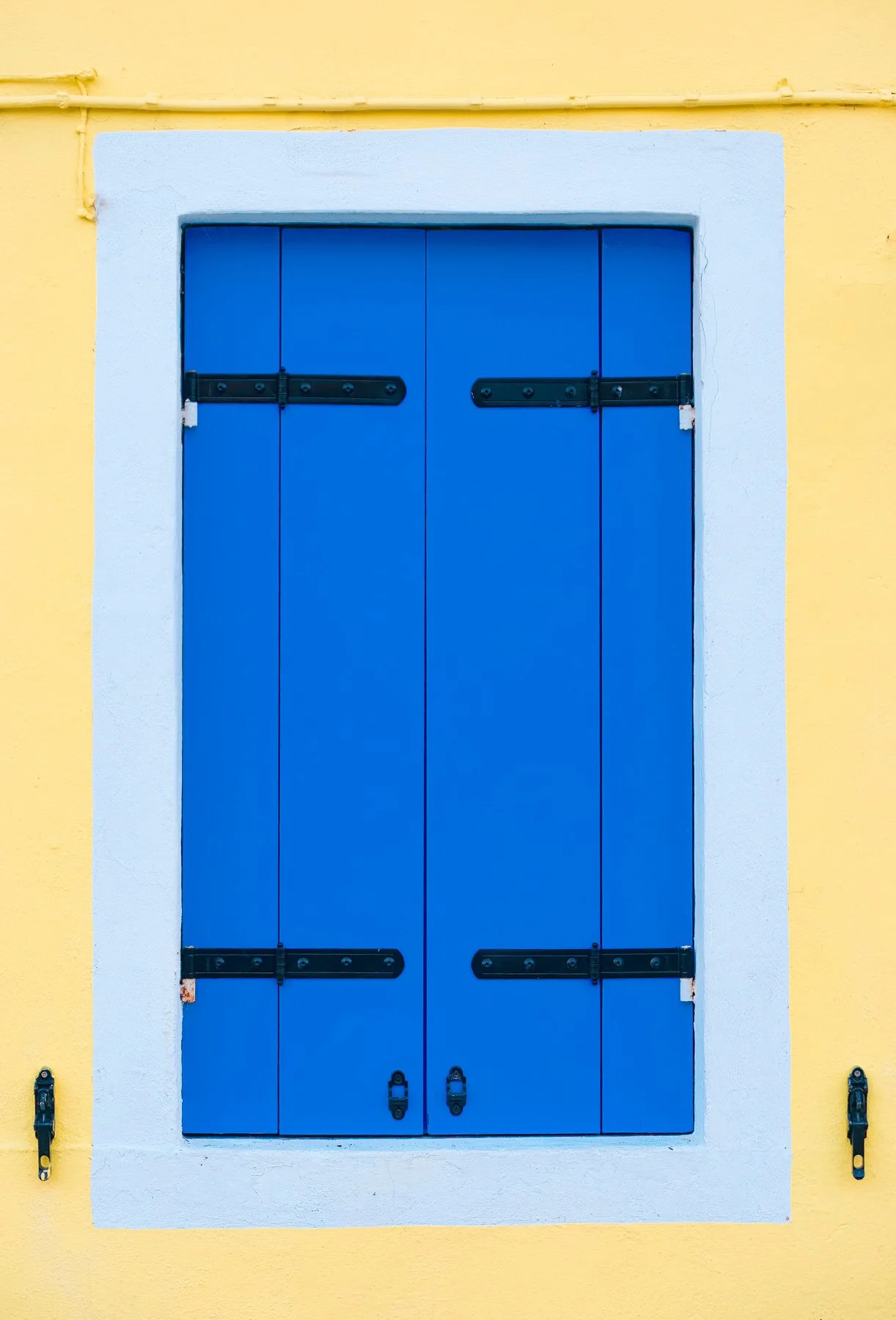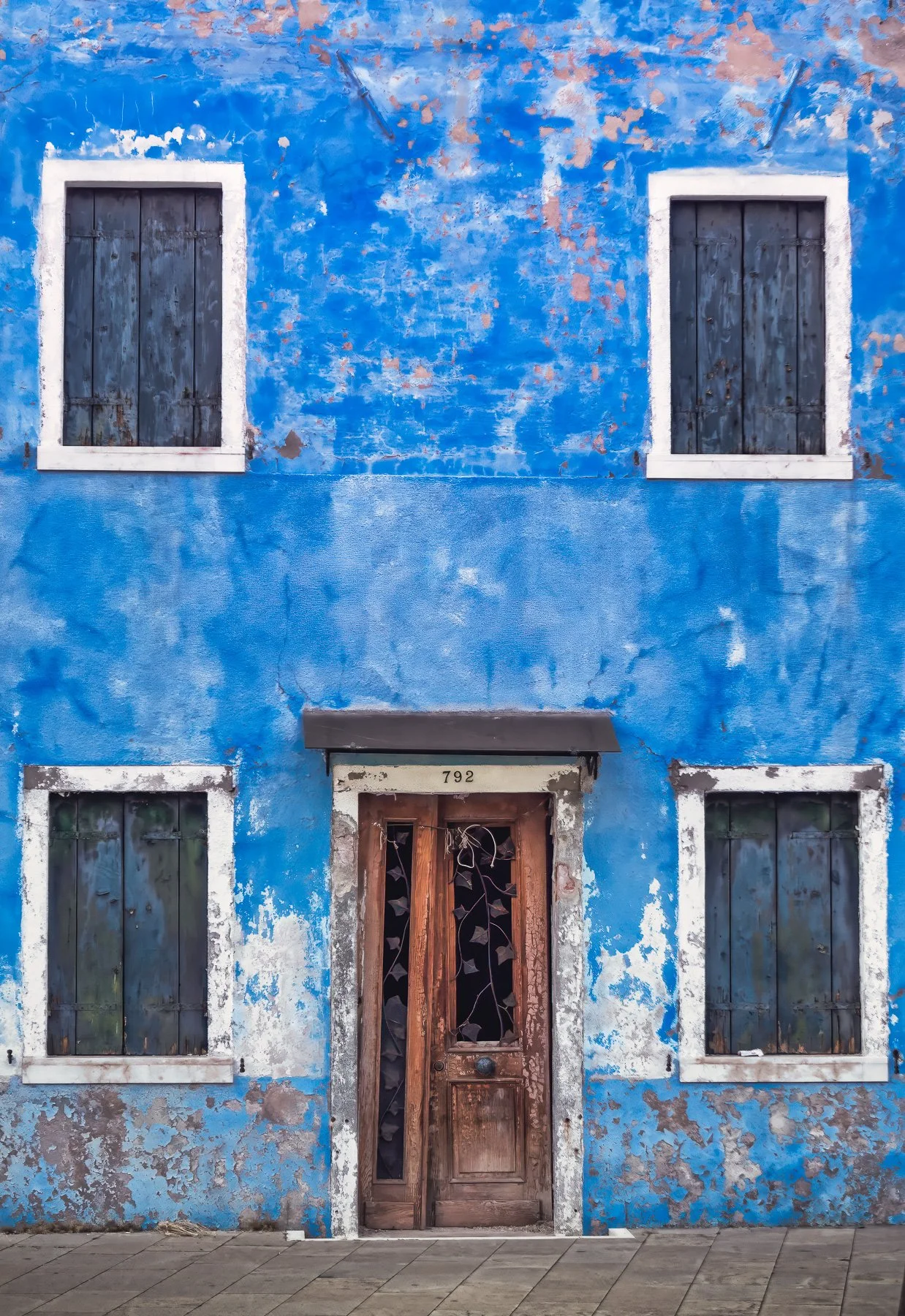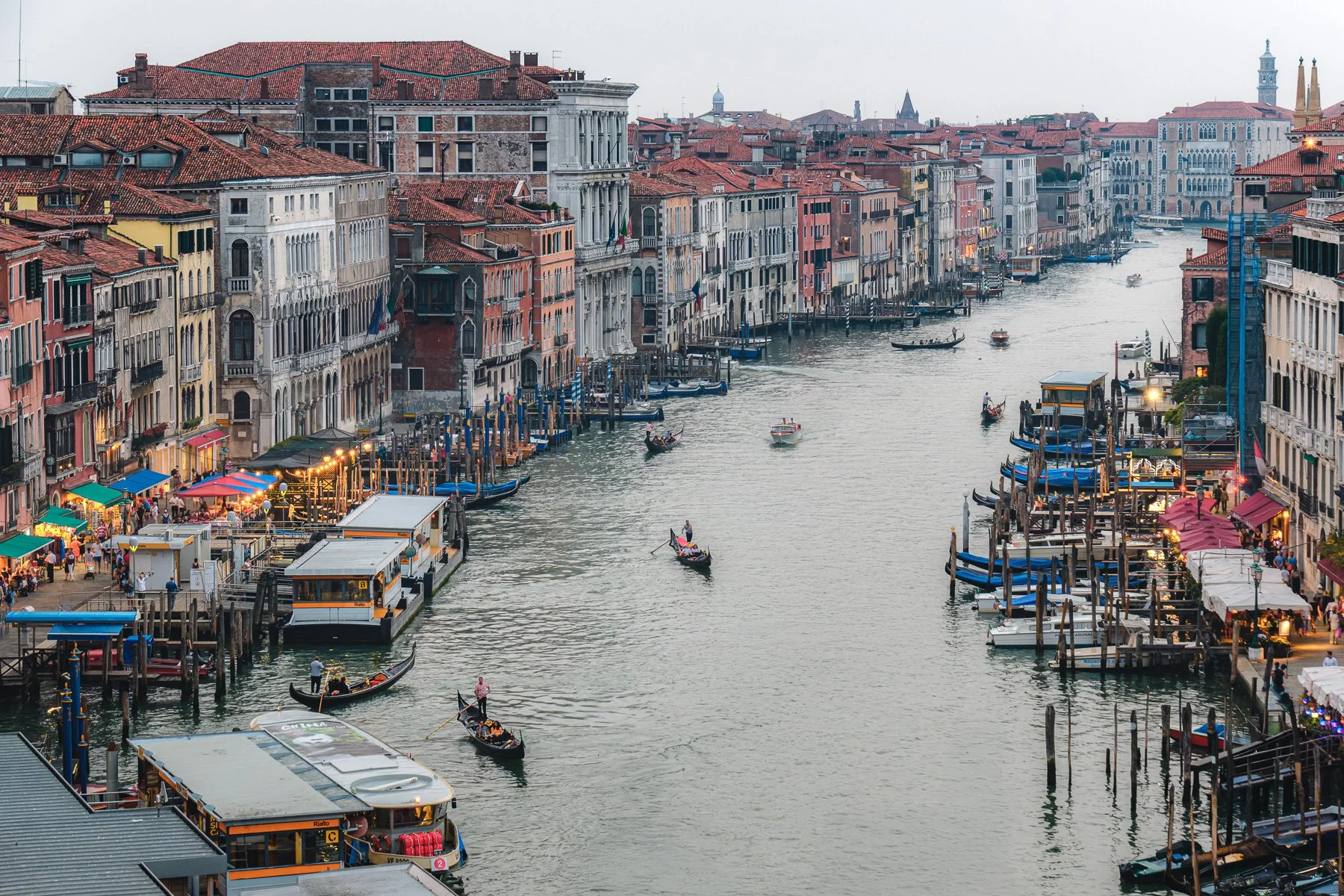
Venice, northern Italy’s most visited city. A tourist trap by some definition, a very beautiful and ancient tourist trap. Sitting just three feet above sea level, the city is traversed by a vast network of canals. Chief among these is the busy Grand Canal, a major thoroughfare flanked by a millennium of living history, where shops, restaurants, museums, and grand plazas stand side by side. Consisting of 118 islands, Venice is a city completely devoid of roads, cars, and bicycles. Navigating the city is reduced to two simple options: Boat or foot. Options include a vast network of Water Taxis and ferries, with the black gondola being the favorite option with tourists. Traversing the canals on foot can be done using the more than 400 bridges, some as small as a few steps up to the largest - the Rialto Bridge. Ferry boats run regularly to some of the other islands, with the two most popular being Murano, best known for its centuries-old tradition of glass blowing, and Burano, popular for its neon-painted fisherman’s cottages and the manufacturing of fine handmade lace. My most recent visit was in September of 2018. It was busy, as it always is. In recent years, the city has enacted measures to control crowds by limiting the number of cruise ships allowed to visit and charging entry fees for parts of the city.
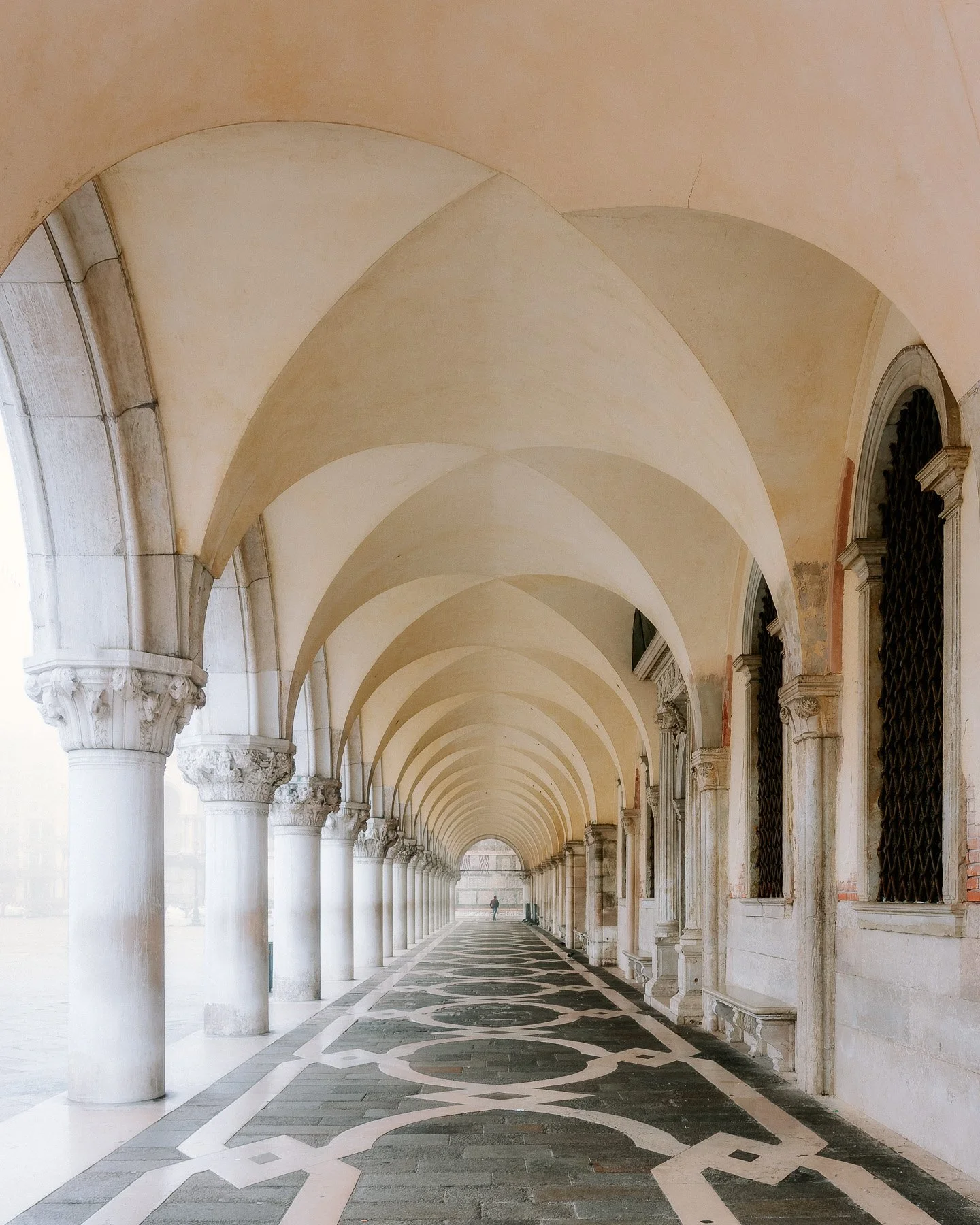
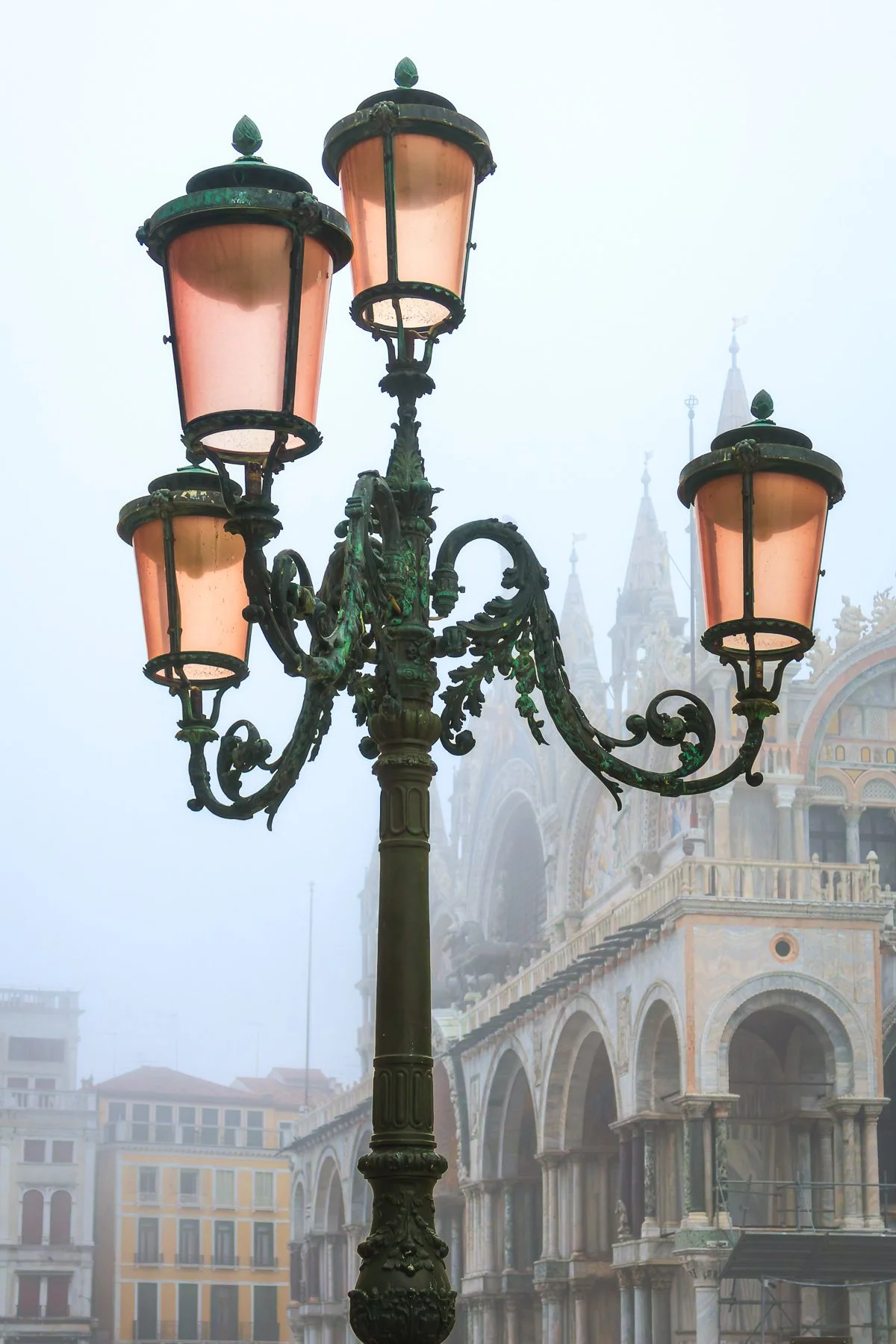
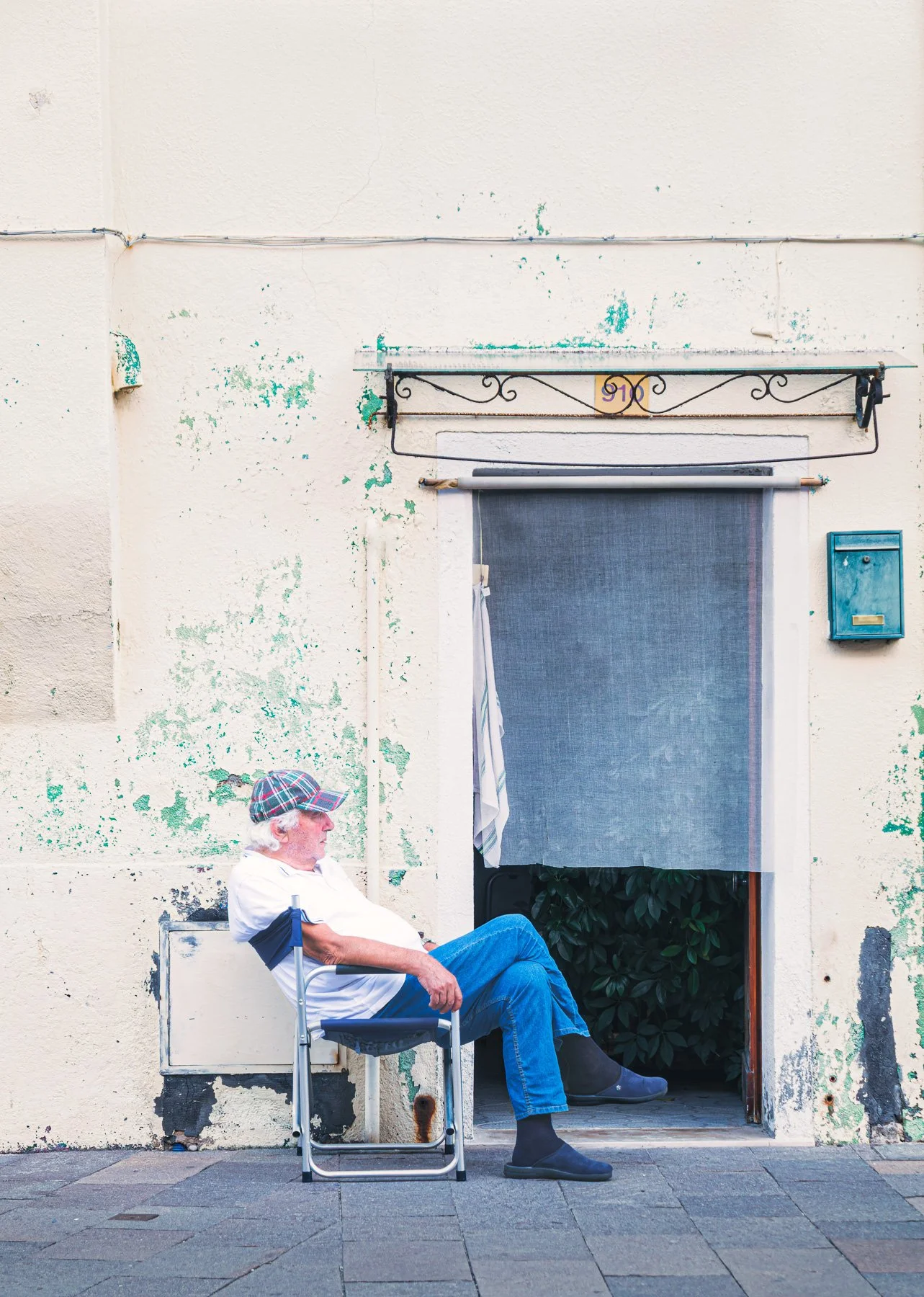
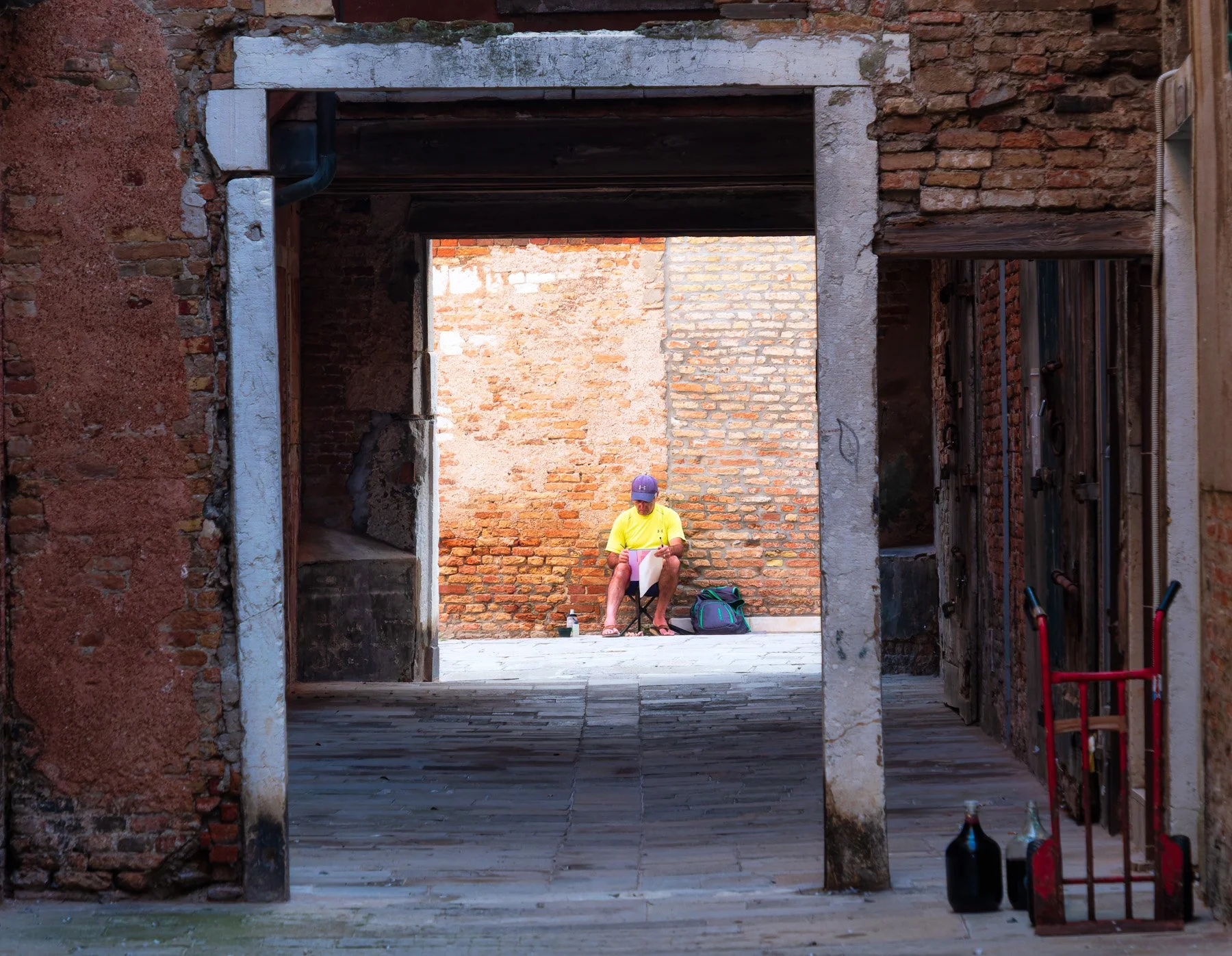
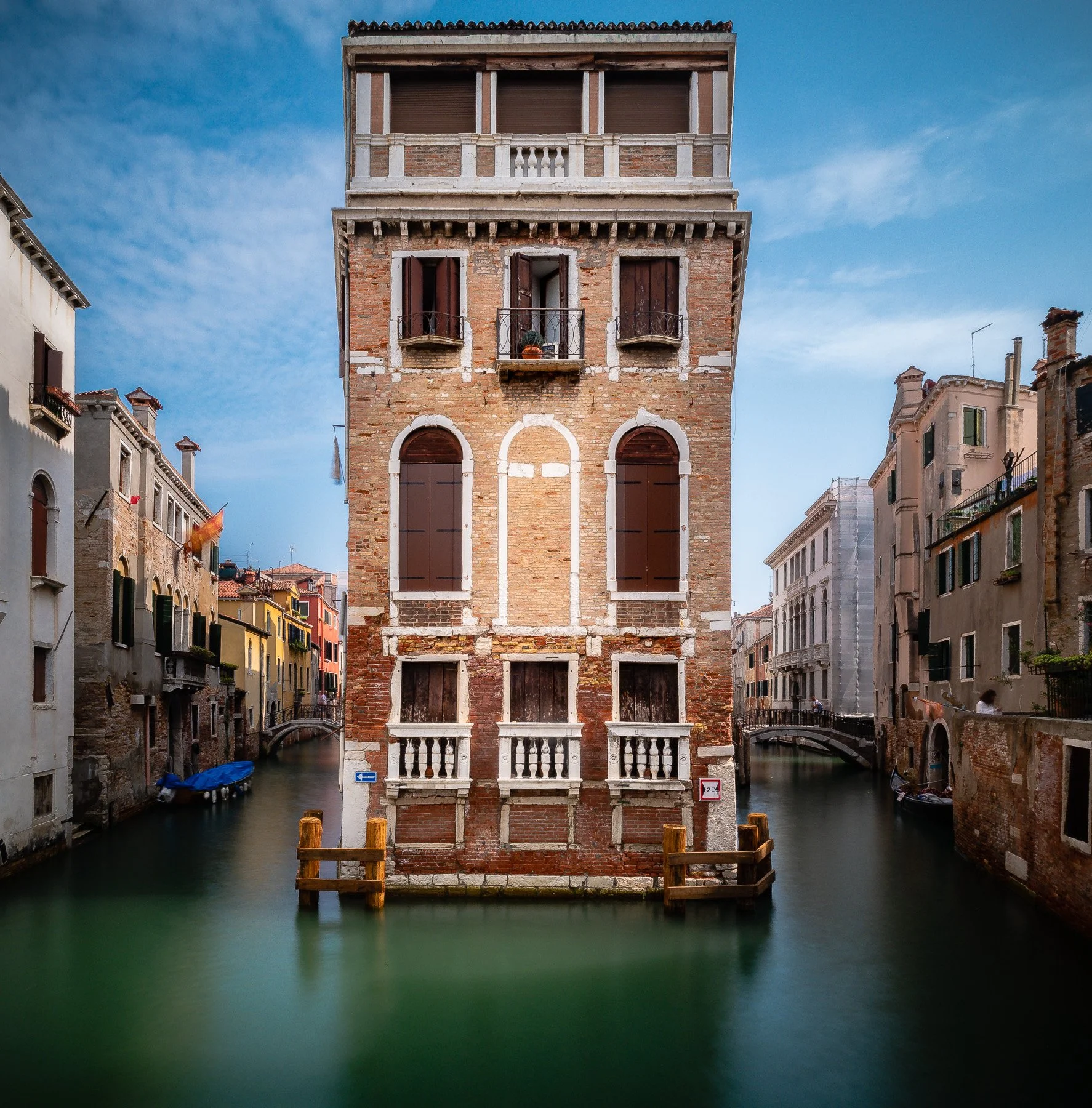
This is one of my favorite cities to photograph. The amount and scope of subject matter are endless, where history and geometry meet. The Piazza San Marco, St. Mark’s Basilica, the Grand Canal, Gondolas, and the Rialto Bridge are the easy postcard shots. These locations are best captured in the early morning before the large crowds arrive. If you are willing to dig a little deeper and wander, there are many opportunities off the beaten path. Lone alleyways and building arcways are some of my favorites. They create lots of leading lines and make great natural framing elements. The city is very colorful, and a vast display of architecture creates many interesting geometric shapes. The vibrant street life in cafes and local plazas adds a human element to your photos.
When deciding on what equipment to use when roaming the city, heavy gear is a liability; a minimalist approach makes much more sense. The smaller the camera and lens, the better I can navigate the city and reduce my profile. I find a rangefinder camera style with either a 35mm lens or a 24-70 mm zoom lens to be the perfect combination for this city. A word of caution: theft is a problem. Large camera bags and backpacks are targets for several would-be thieves and pickpockets who work in groups to separate you from your equipment. This is another reason for minimal equipment. I find that four days in the city give you enough time to see the sights and dig a little deeper for unique photos.